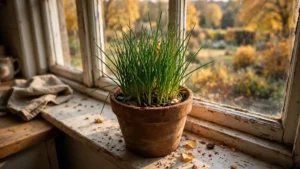
Autumn is the moment chives change hands. All summer they sat outside, growing fast in the long light. Then the nights turn cold, the days shorten, and the plant starts to slow down. Bring the pot inside now and you can keep snipping fresh chives through the cold months; leave it out and the first hard frost will flatten the blades and put the plant to sleep until spring. Growth slows as daylight falls, so start early and take less at a time. This guide is the autumn playbook only. For the year-round basics, our guide to growing chives indoors covers the plant from seed to supper.

Bring Outdoor Pots In Before the First Frost
If your chives spent summer outside, move them in while they are still growing strongly, and do not wait for a frost warning. A light frost will not kill a chive clump, but it bruises the blades, turns the tips yellow, and stalls growth for weeks just when you want the plant at its best indoors. Bring pots in when night temperatures start dropping toward 5 degrees, usually several weeks before the first frost is forecast. Before the pot crosses the threshold, check under the leaves for aphids and slugs, pick off yellowed blades at the base. Trim the clump back by about a third if it is tall and floppy from summer, then give it a few days just inside the door before its final windowsill.
Divide in Autumn, Not Just Spring
Spring is the usual time to divide chives, but autumn division has a real advantage indoors: the pieces you split now spend winter as small, vigorous plants instead of one tired, crowded clump. If your pot is two years old and the middle has gone thin and bare while the edges still grow, it is ready. Tip the whole clump out and pull it apart gently with your hands. A healthy clump usually splits into two or three pieces, and each one is a free plant. Pot each piece into fresh potting mix at the same depth it was growing before, in a pot 15 to 20 centimetres wide with a drainage hole. Water once, then keep the new pots out of harsh direct sun for a few days while the roots settle, and do not snip from a fresh division for two or three weeks.

Sow Chives in Autumn, Slowly and on Purpose
Autumn sowing works for chives, but only if you accept the pace. Seed sown in early September germinates in one to three weeks in a warm room, and shoots take six to eight more weeks before cutting. A pot sown in mid-September is usually ready for its first light snip in late November; one sown in mid-October may not be worth cutting until January. Sow early, and sow with that slow calendar in mind rather than expecting summer speed. Scatter ten to fifteen seeds on damp potting mix in a 15-centimetre pot, cover them with a thin layer of mix, and keep the soil moist but never soggy.

Water Right Down as Growth Slows
The biggest autumn mistake with chives is watering on a summer schedule. In July a pot on a sunny sill could dry out in two or three days. In October the same pot may stay damp for a week, because the plant is drinking less, the sun is weaker, and the air is cooler. Watering every few days out of habit leaves the soil soggy, and soggy, cool soil is where chive roots rot, quietly. From now on, water only when the top two or three centimetres of soil feel dry to a fingertip. Water in the mid-morning, pour slowly until a little runs out of the drainage hole, and tip the saucer out after ten minutes.
Chase the Light as the Days Shorten
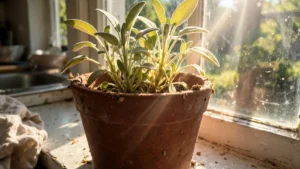
Every week of autumn takes daylight away, and chives feel it sooner than most houseplants. The window that was too hot in summer is exactly the window they want now: a south- or west-facing sill gives the strongest light available. An east-facing window is still good in early autumn, but by late October plants there stretch toward the glass and grow thin and pale, while a north-facing window is too dim and chives there simply stall. Turn each pot a quarter-turn every few days so the clump grows evenly, and keep pots off cold sills on frosty nights by standing them on a folded towel. Keep them well away from radiators, where hot, dry air crisps the leaf tips.
Harvest Before the Plant Fades
Autumn harvesting is a balancing act. The plant is still producing, but every cut now costs more regrowth time than it did in summer. Snip blades about two or three centimetres above the soil, never right down to the base, and never take more than a third of the clump at once. The leaves you leave behind are the plant’s engine, and cutting everything off in one go in October can stall it until spring. As the season deepens, plan one last generous harvest before the plant truly fades. When the blades start yellowing at the tips and growth has slowed to almost nothing, snip what is worth keeping and freeze the surplus.

Succession Into the Cold Months
One chive pot is never enough in autumn, because one slow plant cannot keep up with a hungry kitchen. The answer is succession: keep three pots at different stages, one newly sown, one ready to cut, and one recovering from its last snip. When the ready pot is cut back, the next one takes over. Stagger sowings or divisions by three or four weeks through September and October. The same stagger-the-sowing idea works across the autumn herb shelf, and our guide to growing cilantro indoors in autumn shows the same relay running at a faster pace for a leafier herb. For carrying herbs past autumn, our guide to growing herbs indoors in winter picks up where this one leaves off.
Let the Pot Rest, or Keep It Going
By late autumn you face a real choice, and both answers are honest ones. You can let the pot rest: cut the blades back, move the pot to a cool, bright spot, water only occasionally, and let the plant fade into its natural winter dormancy. It will look finished by midwinter, then push up green tips again in spring. That rest is not failure; it is how a perennial works, and a rested plant comes back stronger. Or you can keep it going: a pot under a grow light on a bright sill, watered sparingly and snipped lightly, will keep producing small harvests all winter, just slowly. Make the choice deliberately in autumn, while the plant is still strong, rather than discovering in December that the decision was made for you.
Autumn chives reward the gardener who plans ahead and then leaves the plant alone to do its slow work. Bring the pots in before the frost, split the crowded clumps, sow one early pot, water less than feels natural, and harvest lightly while the light lasts.