Walk into any garden centre in spring and you will find a whole wall of gardening tools: shiny sets in boxes, gadgets that promise to do three jobs at once, and implements you have never seen before. This guide covers the gardening tools actually worth owning, what each one is for, and how to use it without wrecking your back or your plants.
Start With the Hand Tools
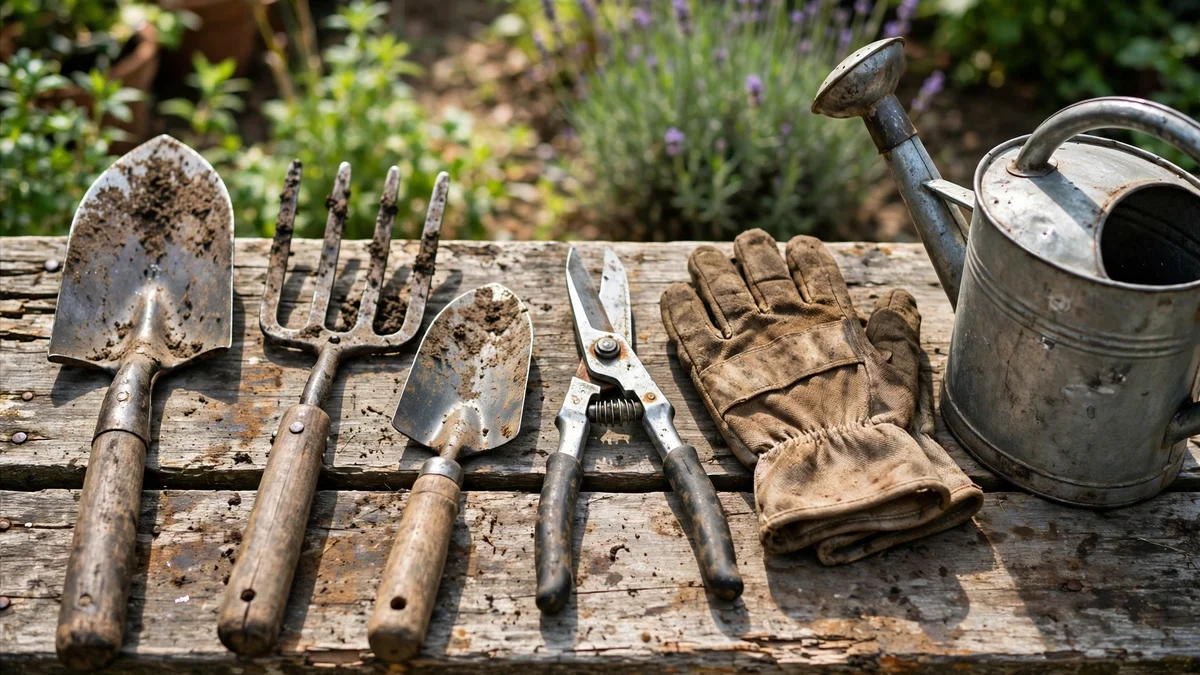
Hand tools do most of the close work in a garden, and they are where quality matters most, because you hold them for hours. A hand trowel is the first thing to buy. It plants seedlings, digs small holes, scoops compost into pots, and lifts weeds out by the root. Look for one forged from a single piece of steel with a comfortable grip, not a thin stamped blade that bends the first time it meets a stone.
A hand fork is the trowel’s partner. Its short, sturdy prongs loosen soil around plants, tease out weeds, and break up crusted earth without disturbing nearby roots. Use it with a gentle rocking motion rather than levering hard, which snaps the prongs. If you are starting from scratch, our gardening starter tips show how these few hand tools fit into a first season.
Cutting Tools: Secateurs, Loppers and Shears
Secateurs, also called pruners, are the tool you will reach for most. They cut stems up to about the thickness of your thumb, deadhead flowers, harvest herbs, and take cuttings. Bypass secateurs, where one blade slides past the other like scissors, give the cleanest cut on living stems and are the right choice for almost all garden work. Anvil secateurs crush the stem against a flat plate and suit only dead wood. Our guide on how to clean and sharpen pruning shears walks through the fifteen-minute routine that keeps them cutting cleanly for years.

For anything thicker than your thumb, step up to loppers. Their long handles give you the leverage to cut branches up to about two inches thick, which is exactly the job secateurs cannot do. Stand square to the branch, open the jaws wide, and cut in one smooth squeeze rather than nibbling at it. Hedge shears are different again: long straight blades for shaping hedges and trimming soft growth into shape. They are not for cutting thick branches, and using them that way dents the blades.
Digging Tools: Spade, Fork and Hoe
A spade is for cutting and moving soil: digging a bed, edging a lawn, planting a shrub, or turning over a patch of ground. A good spade has a flat, sharp blade and a handle that reaches your hip, so you can push it in with your foot and lift with your legs rather than your back. Keep the blade sharp with a file and it will slide into soil instead of bouncing off it. A garden fork is its partner for looser work. Its four square tines break up heavy soil, lift root vegetables, turn compost, and move mulch without cutting through worms and roots the way a spade does.
A hoe is the tool for weeding standing up, and it saves your knees. A draw hoe pulls soil towards you and chops weeds at the surface, while a Dutch hoe pushes just under the surface and slices weed roots with a back-and-forth motion. Hoe little and often, once a week in the growing season, and a bed stays clean with ten minutes of work instead of an hour of hand weeding.
Watering Tools: Cans, Hoses and Nozzles
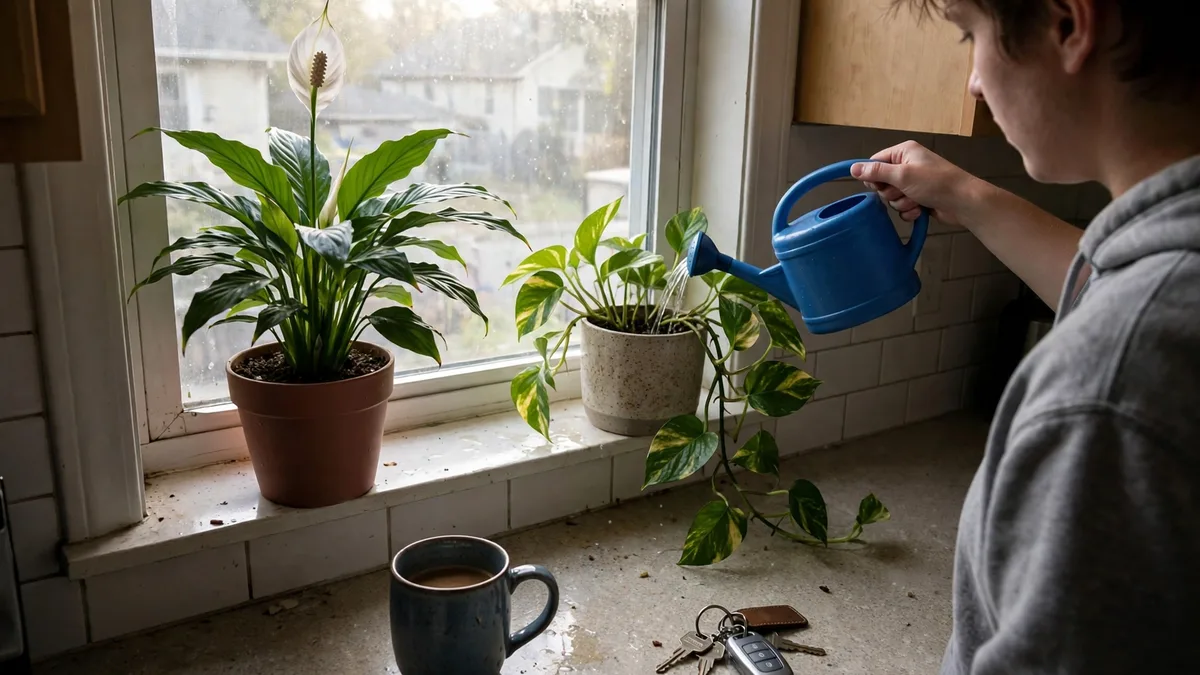
Watering tools are simple, but the wrong one wastes water and damages plants. A watering can with a rose head, the perforated attachment that spreads water gently, is best for seedlings, pots, and anything newly planted, because it does not blast soil away from roots. Choose a can you can carry comfortably when full, and a metal one will outlast plastic by years. A garden hose covers larger areas, and a trigger nozzle lets you switch between a soft shower for beds and a stronger jet for washing down paths. Soaker hoses and drip lines are worth adding later: they deliver water slowly at soil level, which keeps leaves dry and loses far less to evaporation than an overhead sprinkler.

The Tools That Carry and Protect
A wheelbarrow earns its place the first time you move a load of compost or a pile of weeds. A single-wheel barrow is easier to steer through narrow paths, while a two-wheel version is steadier on slopes. A sturdy bucket is the smaller version of the same job: hauling weeds, carrying tools to the far bed, or soaking bare-root plants before planting.
Gloves are a tool too, not an accessory. Thin, close-fitting gloves give you the feel for seed sowing and pricking out seedlings, while thick leather gloves protect your hands when you handle thorny roses or brambles. Buy gloves that actually fit: loose gloves blister your hands and make you clumsy.
Buying Well and Looking After Your Kit
When you buy gardening tools, buy the sturdiest version you can afford rather than the cheapest set in a box. A tool that bends, rusts, or falls apart in a season is not a bargain, and a good spade or pair of secateurs can last twenty years. Stainless steel blades resist rust, wooden handles feel better in the hand and can be replaced, and a comfortable grip matters more than a brand name. Buy tools one at a time as you need them, rather than all at once: the kit grows to fit your garden instead of filling a shed with things you never use.
Care is simple and it is what separates tools that last from tools that do not. Knock soil off after every session, wipe metal parts dry so they do not rust, and rub a little oil on blades before winter storage. Sharpen cutting edges once or twice a season, oil moving parts at the pivot, and hang tools up or keep them in a dry shed instead of leaving them out in the rain.

What You Really Need
Strip away the gadgets and the honest list is short: a hand trowel and hand fork, bypass secateurs, a spade and a garden fork, a hoe, a watering can and a hose, a wheelbarrow, and gloves that fit. That kit will plant, dig, prune, weed, water, and harvest in almost any garden. Once you have it, put the tools to work on a real project: our guide on how to start a vegetable garden for beginners shows how to turn a patch of ground into your first harvest, using the same tools, one bed at a time.