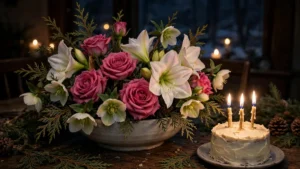
A bouquet of roses is the classic for a reason: a dozen well-chosen roses, tied by hand and wrapped simply, looks like it came from a florist. Choose roses at the right stage, cut them properly, and build the bouquet in your hand with a simple spiral so the stems support each other and the blooms sit in a full, rounded dome. Here is the whole process, from the flower stall to the vase, in about half an hour.

1. Choose Roses That Will Open Beautifully
Look for buds that are still fairly tight, with the outer petals just starting to loosen. A rose already wide open has used up half its vase life and will drop petals within days; a tight bud opens at home over two or three days and lasts far longer. Squeeze the bud gently where it meets the stem: it should feel firm, not soft or hollow. Check the stems too — firm and green at the cut end, not brown or slimy — and skip any bunch with yellowing leaves or a sour smell.
Garden roses, with their soft, layered petals and scent, make the most romantic bouquets, while long-stemmed hybrid tea roses give the tall, classic shape most people picture. Spray roses, with several small blooms per stem, fill gaps and soften the outline.
2. Pick a Colour for the Occasion
Colour is the message of a rose bouquet. Red is the unmistakable declaration of romantic love, for anniversaries, proposals and Valentine’s Day. Pink is gentler — admiration, gratitude and grace — and suits almost anyone, from a friend to a mother to a partner. White means new beginnings and quiet remembrance. Yellow says friendship and cheer with no romantic undertone. Our guide to rose colour meanings covers every shade and when to send it.
For a first bouquet, one colour is the safest and often the most striking choice: a dozen red roses, or a dozen blush pink, looks deliberate and expensive. Avoid mixing three strong colours — red, yellow and orange together can look busy rather than rich.
3. How Many Roses Do You Need?
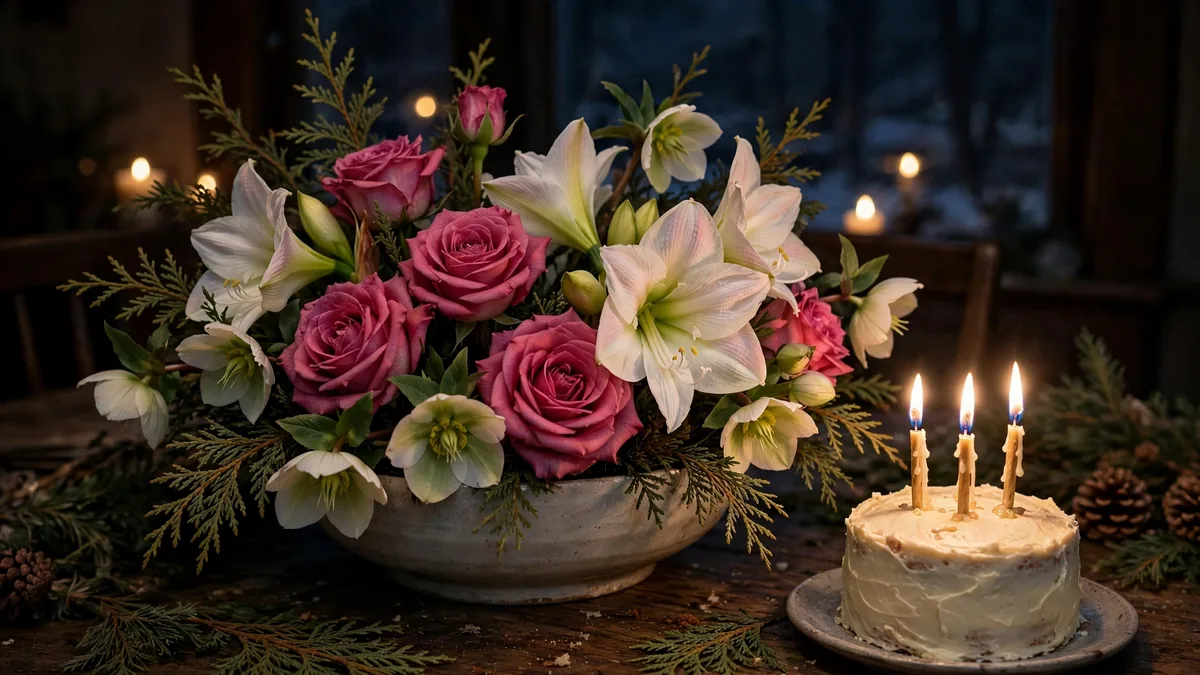
Six roses make a small, sweet posy for a bedside table or a thank-you gift. Twelve is the classic dozen — full enough for a dining table and the standard gift size. Eighteen to twenty-four makes a generous bouquet for a milestone; more than that gets heavy and hard to hold. Add a few stems of eucalyptus for greenery — its soft grey-green leaves sit beautifully against red or pink blooms — but keep extras modest, since the roses should do the talking.
4. Prepare the Stems
Fill a clean bucket or jug with lukewarm water first. Strip every thorn and leaf that would sit below the waterline: left in water, they rot fast, feed bacteria and turn the water cloudy within a day. Use a thorn stripper, or run a blunt knife carefully down the stem away from your hand.
Re-cut every stem at a 45-degree angle, taking about 2 to 3 centimetres off the bottom, under water if you can. The angled cut gives a larger surface for absorbing water and stops the stem sitting flat on the container bottom. Use sharp secateurs or a sharp knife — blunt scissors crush the stem, and a crushed stem cannot drink. Leave the roses to drink for at least an hour before arranging.

5. Build the Bouquet in Your Hand: The Spiral
The spiral is the florist’s method, and it is simpler than it sounds. Hold one rose in your non-dominant hand, about a third of the way down the stem — this is the centre. Take the next rose, lay it across the first at a slight angle, and turn the bunch a quarter turn. Add the next stem at the same angle, turning again. Each stem crosses the one before it, and the blooms spread into a dome that supports itself.
Work from the centre outward: the tallest, fullest roses in the middle, shorter blooms toward the edges, so the dome curves gently downward. Tuck greenery in as you go, a stem or two at a time. Turn the bunch often and check it from above and from the side, so the dome stays round with no gaps. If a rose sits too high, pull it down gently rather than pushing it up, which disturbs the spiral.
When the bouquet looks full, trim the stems to one length — about 30 to 35 centimetres — and tie the bunch firmly where your hand was holding it, using twine, raffia or a rubber band, then tie a second tie a few centimetres lower.
6. Wrap It Like a Gift
Lay a large square of kraft paper, tissue paper or cellophane flat on the table, place the bouquet diagonally across it with the blooms past the top edge, and fold the bottom corner up over the stems. Fold the two side corners in, overlapping them at the front, and tie with ribbon or twine. If the bouquet will travel, wrap the stem ends in damp paper towel, then in a small plastic bag, before the outer paper goes on.

7. Display It in a Vase and Keep It Fresh
Choose a vase tall enough to support at least half the stem length, so the heavy rose heads cannot flop and kink at the rim. Wash it with hot, soapy water first. Fill it two-thirds full with lukewarm water and mix in the flower food packet that came with the roses, one packet per litre. If you are new to vase arranging, our guide on how to arrange flowers in a vase for beginners covers vase sizes and layering in more detail.
Put the vase in a cool spot, out of direct sun and away from ripening fruit, which gives off ethylene gas that makes roses open too fast and drop petals early. The bouquet should look its best on days three to five, when the buds have opened fully.
A well-made rose bouquet should last seven to ten days, and with a little routine it can stretch to two weeks. Every two days, change the water, rinse the vase, add fresh flower food and re-cut 1 centimetre off each stem at an angle. Pull out any brown petal and remove a finished rose completely, since one rotting stem can cloud the water. For the full day-by-day routine, see our guide on how to keep roses fresh in a vase.

Mistakes That Spoil a Rose Bouquet
The most common mistake is buying roses that are already fully open — they look lovely for a day and fade fast. Next is skipping the re-cut: stems left with their shop cut soon clog and stop drinking. Do not cram too many stems into a narrow vase, either — it traps moisture and encourages mould, so split a large bunch between two vases. And do not mist the blooms or leave the bouquet in a hot, sunny window.
A classic bouquet of roses needs no special tools and no florist training — just tight buds, a clean cut, and a spiral built in your hand.