Four years of marriage deserves a table that looks like a celebration, not a formal occasion. The fourth anniversary is traditionally the fruit and flowers anniversary, which is a gift of a theme: bright, fresh colours, real fruit tucked in among the blooms, and nothing stiff or overdone. You do not need a florist or a big table. A low bowl of flowers and fruit, two plates, and a candle are enough to turn an ordinary dinner at home into something you will both remember.
Why Fruit and Flowers Suit Four Years
The fruit and flowers theme works because it is generous without being grand. Fruit brings colour, shape and scent to a table, and it costs far less than an armful of extra blooms. A few apples, pears or oranges fill out a bowl in a way that flowers alone cannot, and the whole arrangement looks abundant even when the flower count is modest. It also suits a small, intimate table: a low bowl of fruit and flowers sits between two people without blocking the view or getting in the way of the plates.
Four years is also the point where the early anniversaries have set a pattern. Paper came first, then cotton, then leather. Each year had its own texture, and this year the table gets to be the brightest of the four. If you followed the series, our third anniversary table kept things calm and warm in white and leather; this year is the opposite mood, fresh and colourful, and the fruit is what makes the difference.
The Best Flowers for a Fourth Anniversary Table
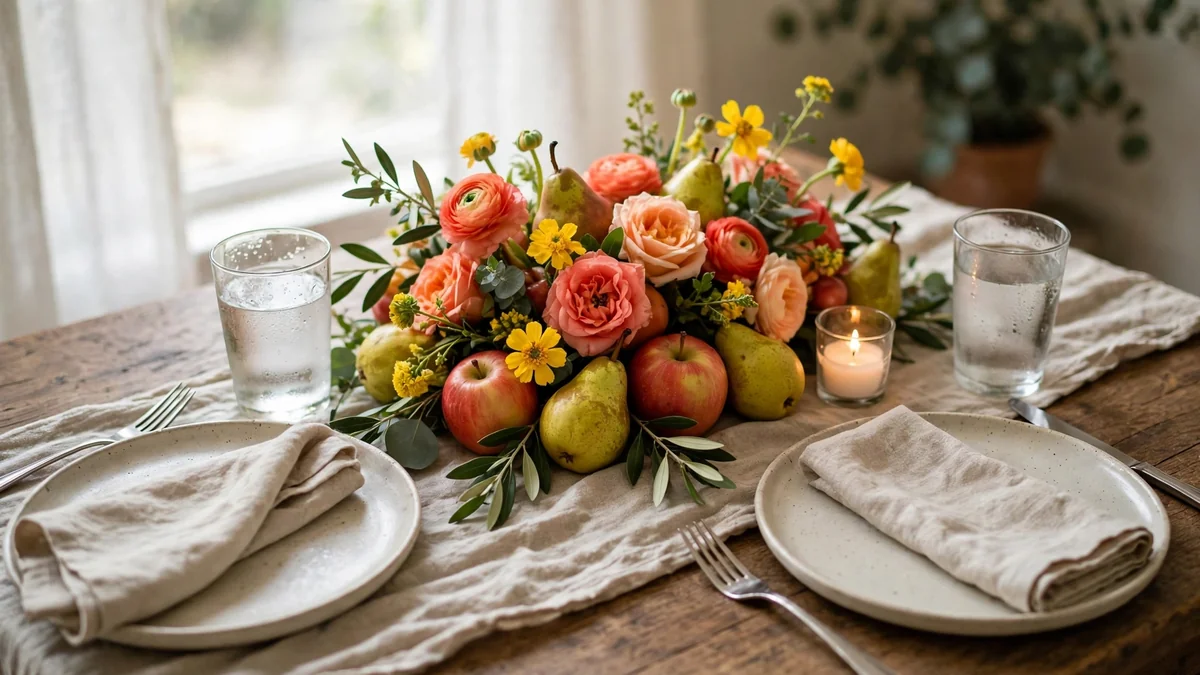
Start with colour, not variety. Pick two or three bright colours and repeat them, and the table will look planned rather than random. Coral and peach roses are the easiest anchor: they are romantic without being as formal as red roses, they last well in water, and their soft petals sit nicely against the smooth skin of fruit. Ranunculus in peach or coral adds the same softness in a smaller, layered bloom that fills gaps between the larger flowers.
For brightness, add gerbera daisies in orange or hot pink and yellow freesia. Gerberas are cheerful and sturdy, with long straight stems that are easy to arrange, and their flat faces catch the light. Freesia brings scent, which matters at a small table where you sit close to the flowers, and its small yellow trumpets lift the whole arrangement. A little eucalyptus or olive foliage keeps the bright colours from looking garish and gives the bowl its green base.

Building the Centrepiece
A shallow bowl is the best vessel for this theme, because it holds fruit and flowers together at the same level. A deep vase hides the fruit; a flat bowl lets it show. Line the bowl with a small block of wet floral foam or a crumpled ball of chicken wire, then push the flower stems in first, keeping them short so the blooms sit just above the rim. Leave gaps on purpose. Then tuck the fruit into those gaps: a pear here, an orange there, an apple where the bowl looks empty. The fruit should look settled in, not balanced on top.
Keep the centrepiece low enough to see over. On a small table, that means the top of the flowers should sit below eye level when you are both seated, roughly a handspan above the table at most. Anything taller turns a dinner for two into a conversation through a hedge.
Setting a Small Table for Two
A small table needs less, not more. Two plates, two glasses, one candle, and the bowl in the middle is a complete setting. A plain linen runner or a folded cloth under the bowl protects the wood from water and gives the bright colours somewhere calm to sit. Skip the extra vases and scattered petals; on a small surface they read as clutter, and every extra object is one more thing to move when the food arrives.
Use the fruit twice. A small bowl of the same fruit beside the centrepiece doubles as dessert and ties the table together without costing anything extra. For ideas on choosing blooms for the person across the table, see our guide to flowers for your wife, which covers anniversaries, birthdays and just-because bouquets.

How Long It Lasts
A fruit and flower centrepiece holds up better than a flower-only arrangement, because the fruit does not wilt. The flowers will look their best on the day you build it and stay good for three to five days if you keep the water fresh. Change the water daily, trim a centimetre off each stem every other day, and keep the bowl out of direct sun and away from the fruit bowl in the kitchen, since ripening fruit gives off gas that shortens the life of cut flowers. That last point matters here: the fruit in the centrepiece will ripen faster than the fruit in the fruit bowl, so eat the centrepiece fruit first.
Build the arrangement the morning of the anniversary, or the evening before at the latest. Roses and ranunculus open slowly, so flowers bought two days ahead will be at their best on the day. Gerberas and freesia open faster, so buy them the day before.
What It Costs
This is one of the cheapest anniversary tables to build, because the fruit does so much of the work. A bunch of roses, a bunch of ranunculus or gerberas, a small bunch of freesia, and a bag of apples, pears and oranges is usually enough for a full bowl, and a bowl you already own costs nothing. Expect the flowers to be the main expense and the fruit to be a small addition on top of a normal food shop.
Buying from a market stall or supermarket rather than a florist keeps the price down, and loose stems are cheaper than a ready-made bouquet. If you are unsure what a fair price looks like before you shop, our guide to how much a bouquet of flowers costs gives realistic prices for common stems so you can budget the table before you buy anything.

A Simple Order to Put It Together
Buy the flowers and fruit in the morning, and let the flowers drink in a bucket of water for an hour while you set the table. Lay the runner, set the plates and glasses, and put the candle where it will not sit under a leaning stem. Then build the bowl: stems first, short and low, then the fruit tucked into the gaps, then a final turn of the bowl to check it from both seats. Light the candle last, and step back. If the table looks bright and a little abundant, it is done; adding more at that point usually makes it worse.
Four years in, the table does not need to impress anyone but the two of you. Fruit and flowers, bright colours, and a low bowl you can see over: that is the whole idea, and it is enough.