In winter, a sunroom stops behaving like the bright, warm room you watered all summer. The days are short, the glass is cold, and the plants have slowed almost to a standstill. Yet many owners keep watering on their summer routine, and that is exactly when sunroom plants start to fail. In winter, the danger is rarely thirst. It is cold, wet soil that never dries.
The rule for the whole season is simple: water less, water less often, and water in the morning.
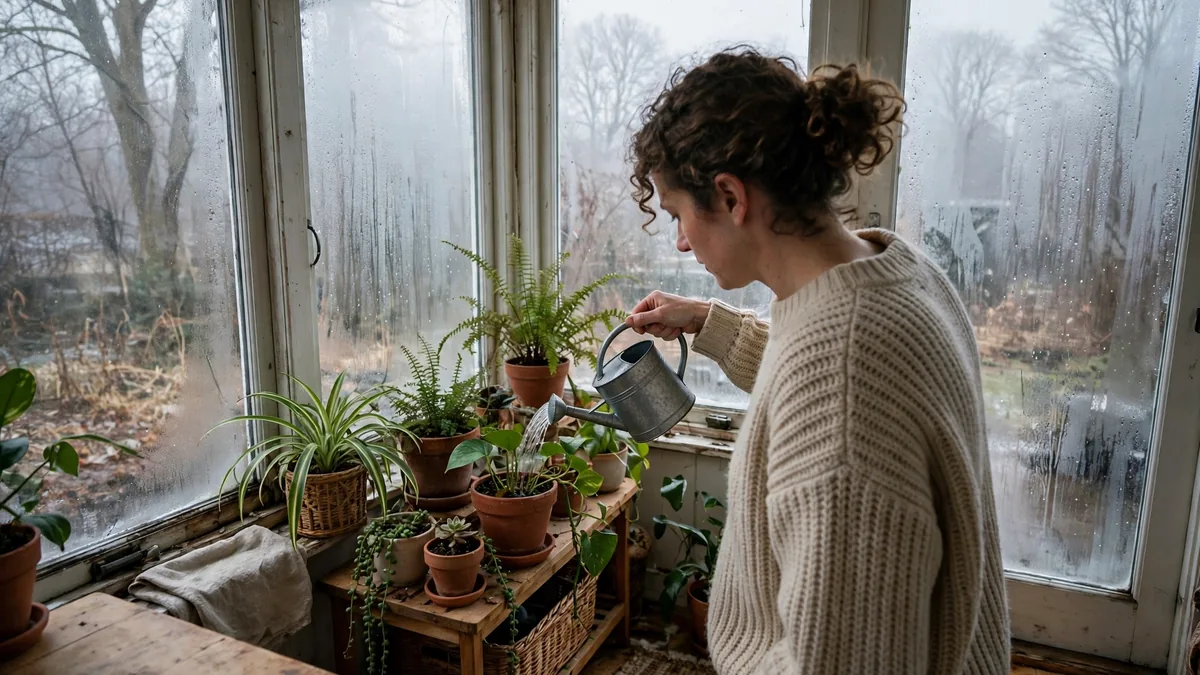
Why Winter Changes the Rules
Three things change at once. First, the light collapses: a sunroom that gave eight hours of strong sun in June may give only four hours of pale, low light in December. With less light, plants grow less and drink far less water.
Second, most houseplants go dormant. A peace lily that grew a new leaf every week in summer may not grow at all between December and February, and a dormant plant uses only a fraction of the water a growing plant uses.
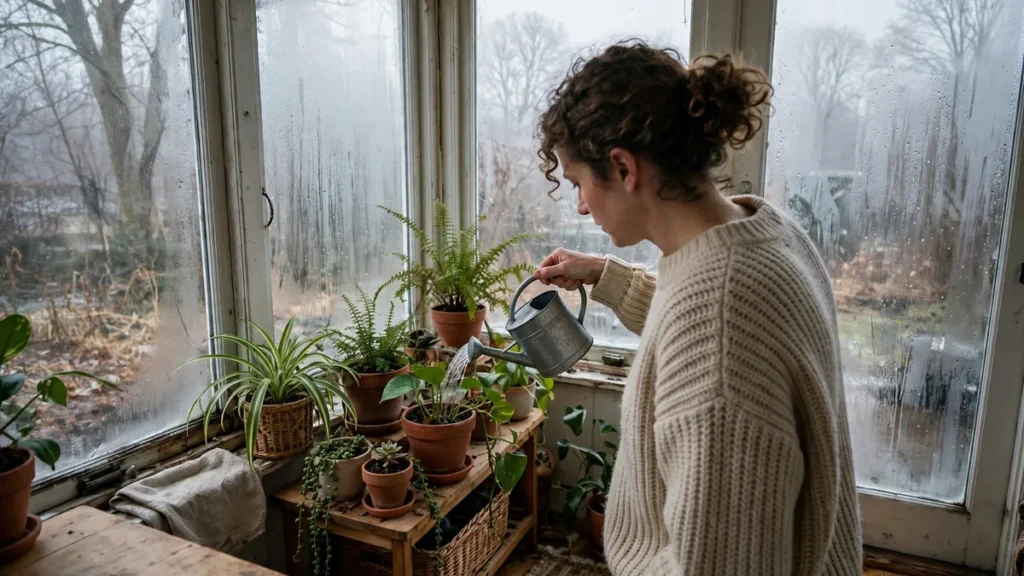
Third, the glass becomes the coldest surface in the house. Overnight, the air beside a window can drop several degrees below the rest of the room, and soil in a pot hard against the glass cools right through. Roots in cold, wet soil cannot take up water, so the water sits there and rot starts. Our general guide to watering plants in a sunroom covers the year-round basics.
How Much Less Water Do Winter Plants Need?
Expect to water about half as often as you did in summer, and often less. If a plant needed water every four days in July, try every eight to ten days in January. If it needed water weekly in summer, it may need water only every two or three weeks in winter.
Find your winter rhythm by stretching the gap gradually. Water, note the date, then wait, checking the soil every few days and watering again only when the soil tells you to.
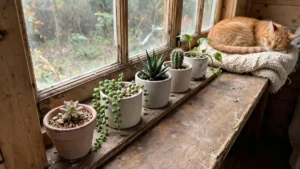
Succulents and cacti need the biggest cut: once a month, or even less, is often enough. Leafy tropical plants such as ferns and peace lilies still need regular moisture, but roughly half their summer amount. If you are choosing plants for the brightest sill, our guide to the best plants for a sunroom window notes which ones cope best with a dry winter rest.
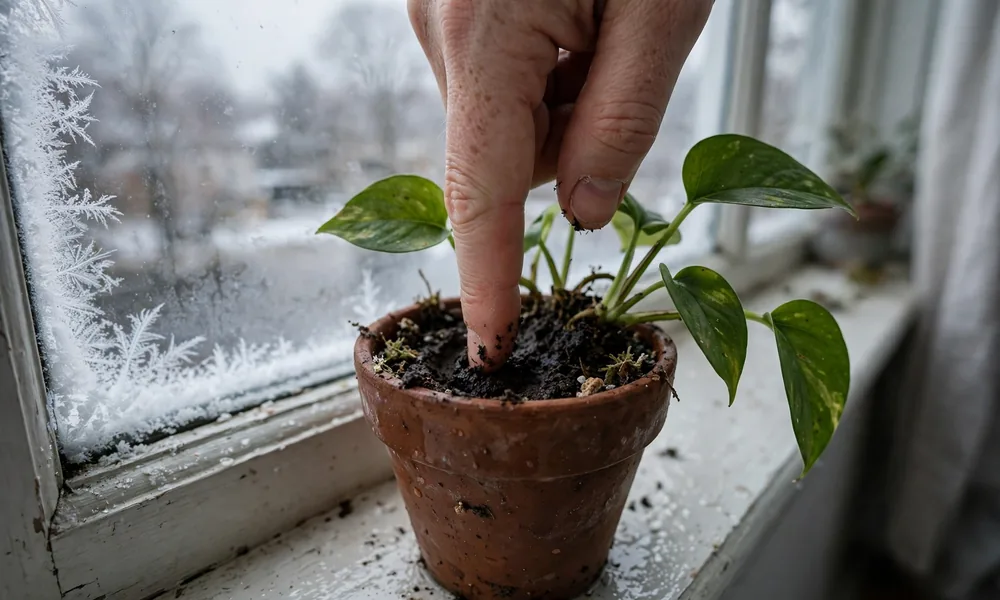
The Finger Test Lies Differently in Winter
In winter, the surface can look dry while the soil below is still wet and cold. Central heating dries the top centimetre quickly, while the deeper soil stays damp for days. So push your finger three or four centimetres in, past the dry crust. If it feels cool and damp at that depth, leave the plant alone, however dry the surface looks.
Weight is a better winter check than appearance. Lift the pot: one that still holds water feels heavy, and one genuinely ready for water feels noticeably light. Never water just because the calendar says so, or because the leaves look a little dull. In winter, dull leaves are often a light problem, not a water problem.
Cold Glass, Warm Roots: Move the Pots First
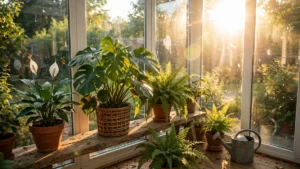
Before you change how much you water, change where the pots sit. A pot hard against the glass in January sits in the coldest spot in the room, and its roots can chill badly overnight. Move pots a step back from the windows, even by thirty centimetres. The light there is still far brighter than an ordinary room, and the roots stay several degrees warmer.
Never let leaves press against cold glass overnight: a leaf touching a freezing pane can blacken where it touches. Raising pots off a cold floor helps too. Set them on a wooden stand or a cork mat, so the soil stays warmer and dries more evenly.
Heating, Condensation and Dry Air
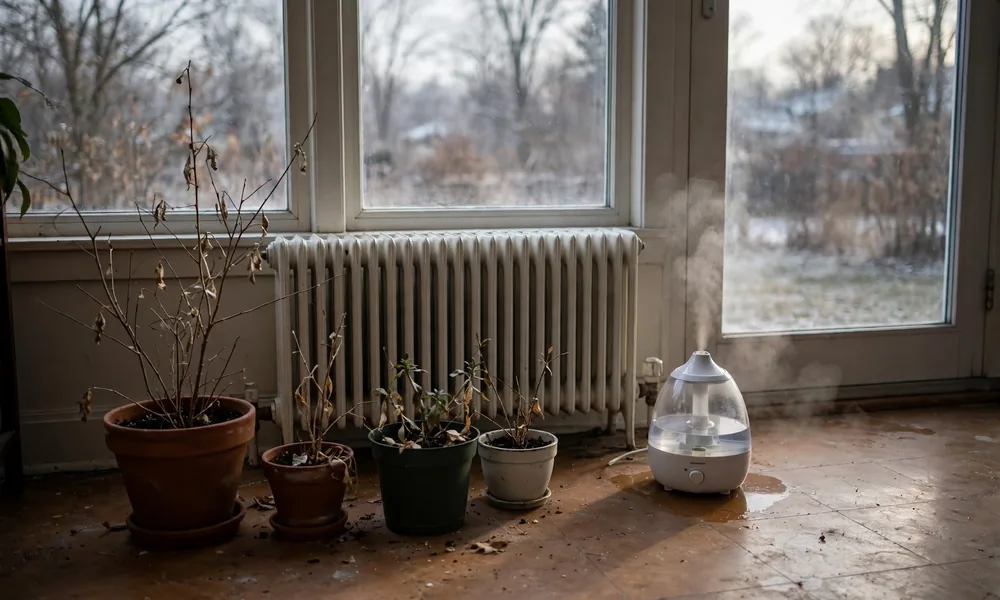
Winter sunrooms hold a strange contradiction: the air can be dry while the soil is wet. Heating dries the air, so leaf tips may brown and crisp even while the roots sit in damp soil. The fix is not more water in the pot. It is more moisture in the air: group plants together, set pots on trays of pebbles with a little water below the pebble tops, or run a small humidifier nearby.
Condensation is the other winter sign to read. A little mist on the glass in the morning is normal. Glass that stays wet all day, or damp frames, mean the room holds too much moisture, and wet soil is usually part of the cause. Water less, let saucers dry out, and open a vent for an hour on a dry day.
How to Water in Winter, Step by Step
Water in the morning, never in the evening. A plant watered in the morning has the whole short day to take up water while the room is warmest, and splashes dry before the cold night. A plant watered at dusk sits in cold, wet soil all night, which is when root rot gets its chance.
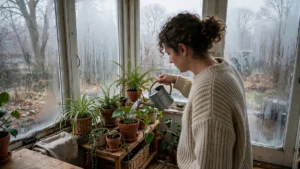
Use lukewarm water, not cold water straight from the tap: cold water on cold roots is a shock. Fill the can and leave it in the room overnight.
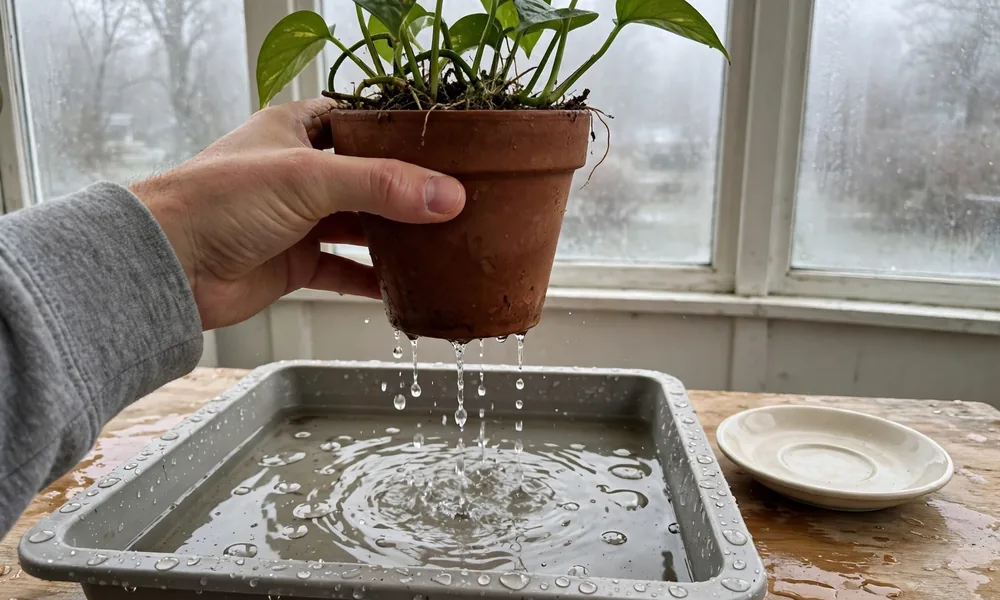
Bottom watering works well in winter because it keeps leaves dry and lets the soil take up only what it can hold. Set the pot in a tray of lukewarm water for fifteen to twenty minutes, until the top of the soil feels damp, then lift it out and let it drain completely. Always empty the saucer afterwards: roots sitting in cold water for days is the most common cause of dead sunroom plants in winter.
Too Much or Too Little? Reading the Signs
Overwatering shows up first in the leaves. Lower leaves turn yellow and soft, then drop, while the soil stays damp for days. The stem may feel soft at the base and the soil may smell musty. If you see these signs, stop watering entirely until the soil dries out, move the pot to the warmest, brightest spot, and remove the yellow leaves.
Underwatering in winter is rarer than people fear. Leaves droop and feel papery, edges crisp and brown, and the soil pulls away from the sides of the pot. If that happens, water thoroughly once, let it drain, and go back to checking the soil.
Keep a simple note for each plant: the date you watered, and how the soil felt first. After a month you will have a personal winter routine built from what your plants actually needed. When spring comes, shorten the gaps gradually as the plants wake up. The summer counterpart to this guide, summer sunroom watering, covers the opposite season, when the same room dries out fast.
Winter is the season when doing less is doing more. Water half as often, water in the morning with lukewarm water, and keep the pots off the cold glass. Your plants will sit quietly through the dark months, and when the light comes back in spring, they will be ready to grow again.