A boathouse is a room built around water. One side opens to the dock, the other holds boats, ropes, and oars, and the light comes in low and wide across the surface outside. It is a long, low building, not a tall one, and that shape changes everything about how plants should be styled inside it.
Styling a boathouse is about working with that long, low shape. The plants should sit low, spread out along the length of the room, and leave the view of the water clear. They soften the weathered wood, pick up the greens and blues outside, and make a working waterside building feel like a place to sit and stay a while.

Start With the Water, Not the Walls
In an ordinary room, plants go against the walls and in the corners. In a boathouse, the first styling decision is where the water is, and which way the room faces it. Stand at the door to the dock and look back into the room. The plants should lead your eye toward the water, not block it, and the best displays run along the length of the room, low and horizontal, like the building itself.
Keep the centre walkway clear. A boathouse needs a straight, open path from the land door to the dock door, wide enough to carry a boat, a paddle, or a wet dog through without brushing a leaf. Style along the sides instead: a low bench of plants on one side, a single tall plant in a heavy pot at the far end, and nothing in the middle.
Frame the Wide View, Don’t Fill It
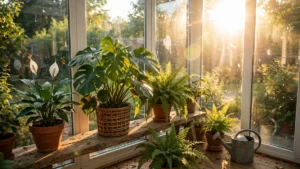
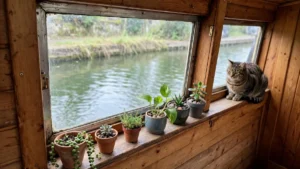
A boathouse window is usually wide and low, and the water beyond it is the best picture in the room. Plants should frame that view, never fill it. Put a pot at each end of the window, low and compact, and leave the middle of the glass completely clear.
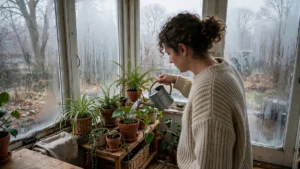
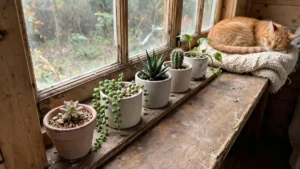
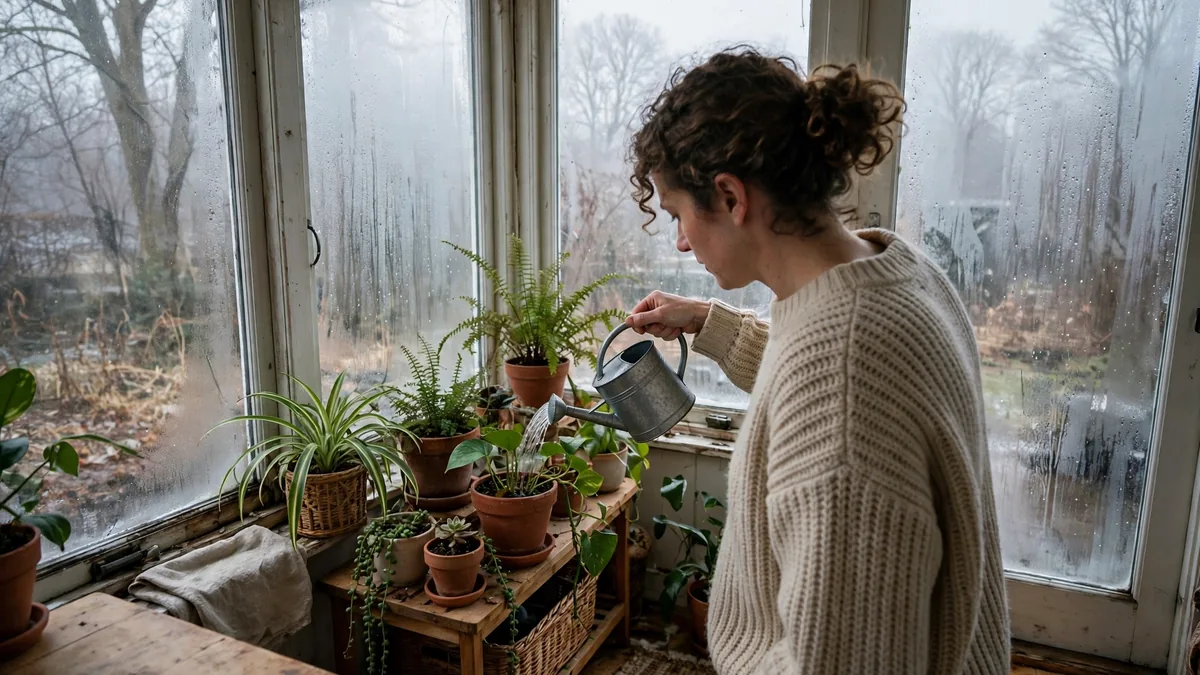
Choose low, spreading plants for the sill, not tall, upright ones. A fern, a trailing plant, or a small olive tree in a wide, shallow pot suits a boathouse sill, because it stays below the top of the window and lets the light pour in over it. Match the pots on either side, but not the plants: two identical terracotta pots give a calm frame, while two different leaf shapes keep it from looking stiff. For more waterside plant ideas, see our guide to the best plants for a seaside garden, which suits the same salty, breezy light.

Let Wood and Rope Do the Styling
The boathouse already has a palette: weathered wood, natural rope, canvas, and galvanised metal. The plants should sit inside that palette, not fight it. Woven baskets, terracotta pots, wooden crates, and metal buckets all belong here, and they look better in a boathouse than glossy ceramic ever will.
Hang plants from the beams, but keep them high and simple. A trailing pothos or spider plant in a rope hanger, hung from an exposed beam over a bench or a side wall, softens the hard lines of the ceiling and draws the eye up without getting in the way.
Style the Boat Bay as a Backdrop
Every boathouse has a working end, the bay where the boat sits, and it is tempting to hide it. Do not. A boat, a rack of oars, and a coil of rope are the most honest styling in the room, and plants look better against them than against a bare wall.
Keep the plants out of the working space itself. Nothing should sit on the boat, on the slipway, or where a hull needs to swing. Style the edges of the bay and the bench beside it, and leave the bay itself clear. One large, sculptural plant at the end of the bay, in a heavy wooden crate or a big terracotta pot, anchors the whole room and gives the long space a full stop.
Choose Pots That Can Live by the Water
The pots do more styling work in a boathouse than the plants, because the wood is pale and grey and the pot is the warm colour in the room. Terracotta, woven seagrass, and weathered wood are the natural choices. Pick a palette and stick to it across the whole building: three pot materials at most, repeated from bench to dock, make a long room feel like one home instead of a collection of odd pots.
Style for damp, not against it. A boathouse floor gets wet, and a display that sits flat on the floor will mark the wood and trap damp underneath. Raise pots on wooden crates, low benches, and slatted stands, so air can move underneath them and the floor can dry. If you want the practical side of waterside plant life, our guide on how to care for a plant in a narrowboat covers the same damp, draughty conditions, just on the water itself.

Style the Dock as a Second Room
The dock is the boathouse’s second room, and it deserves the same styling care as the inside. A row of plants in wooden crates and metal buckets along one edge of the dock, with a coiled rope beside them, turns a bare plank walkway into a place to sit with a cup of tea. Keep the plants to one side only, so the other side stays clear for stepping on and off a boat.
Group dock plants in threes, and keep the groups low. Three pots of different heights in a crate read as one arrangement, and they are heavy enough together to stay put when the wind comes across the water.

Mistakes That Spoil the Look
The most common styling mistake in a boathouse is too many plants. A long, low room fills up fast, and every extra pot makes the walkway narrower and the view smaller. Start with one display per wall, live with it for a week, and only then add a second.
The second mistake is blocking the water. A tall plant in front of a wide window or a sliding door turns a bright waterside room into a dark shed. And remember the boats: if a display blocks the slipway or sits where a boat swings, it is the wrong display for that spot, however good it looks in a photograph. For the same less-is-more approach in another open-air space, our guide on how to style plants on a roof terrace uses the same discipline: frame the view, keep the path clear, and let the setting do the talking.
A boathouse styled well feels like the water moved indoors for a visit: weathered wood, rope, and a few green shapes that belong there. Keep the walkway clear, frame the wide windows, raise the pots off the damp floor, and let the dock carry the look outside.