A tiny house is not a small flat. It is a whole house squeezed into the footprint of a parking space, and that changes plant care in ways a normal small room never does: the ceiling is low, the sleeping loft sits in the hottest air in the house, every surface does two jobs, and the whole building can one day be hitched up and moved.
A tiny house is also one of the easiest homes to look after a plant in: everything is within arm’s reach and you pass every plant a dozen times a day. This guide covers the tiny-house problems specifically: the baking loft, the lack of floor space, the dry heat of a wood stove, and the day the house itself moves.

The Loft Is the Hottest Room in the House
Hot air rises, and in a tiny house it has nowhere else to go. The sleeping loft under the roof can be several degrees warmer than the living area below, and a plant put up there to get it out of the way will cook slowly: leaves crisp, soil dries in a day, growth stalls.
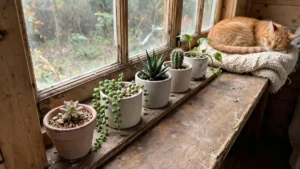
Keep plants at living level, never in the loft: the kitchen counter, the windowsill, and the wall beside the sofa are all cooler than the sleeping platform. In winter, keep plants a hand’s width back from cold glass, since a leaf touching a freezing pane will blacken.
Plants Go Up, Not Down
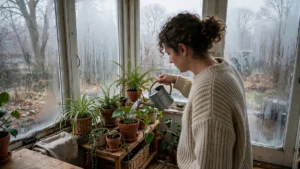
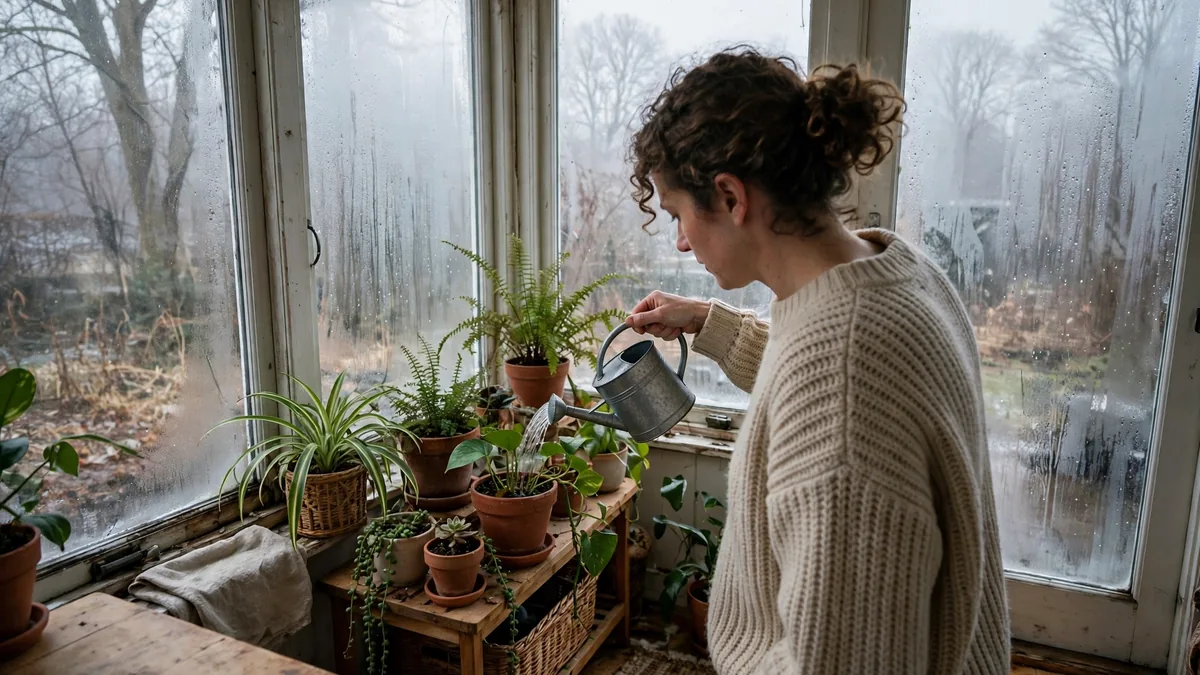
A tiny house has almost no floor space to spare, and a plant on the floor gets kicked or shoved aside every time you move. Use the walls and ceiling instead: hanging planters from ceiling hooks, wall-mounted pockets, and a narrow shelf above the window all give plants a home that costs no floor space.
Trailing plants are made for this. Pothos and spider plants spill down from a high shelf without taking up a centimetre of worktop. Mount them properly: a hook screwed into a stud or ceiling joist, not a sticky pad that will give way one night.
Think about weight, too. A tiny house on wheels has a strict weight limit, and wet soil is heavy. Three small plants in plastic pots weigh far less than one big plant in ceramic. Two or three plants that thrive beat eight that are always in the way.

Every Surface Does Two Jobs
In a tiny house, the table folds down, the sofa becomes a bed, and the kitchen counter is also your desk. A plant on a multi-use surface will be moved, knocked, or buried under a laptop within a week. Give each plant a spot nothing else needs: a fixed shelf or a hook by the window.
The fold-down table is the classic trap: it looks like the perfect plant spot until dinner time, when the plant has to go somewhere and ends up on the floor. If a surface moves, folds, or opens, it is not a plant’s home.
Light: Few Windows, and Mostly High Ones
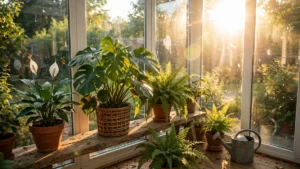
Tiny houses often have fewer windows than a flat, and the ones they do have are small or set high up under the roof. Light arrives in narrow patches and moves fast: a spot bright at ten in the morning can be dim by noon.
Watch the light for a few days before you settle on a final place, and match the plant to the spot. If your house is parked in shade or faces away from the sun, choose plants that genuinely cope with dim conditions. Our guide to low-light indoor plants ranks the species that thrive with very little sun. Turn each pot a quarter-turn every week so growth stays even.
Water: Small Tank, Small Thirst
Many tiny houses run on a rainwater tank, and every litre counts. Plants need far less water than most people think, and overwatering is the fastest way to kill a plant in a small, well-sealed house, where wet soil stays wet and invites rot.
Always test the soil before you water: push a finger two or three centimetres into the mix, and if it feels damp, leave it alone. Water thoroughly only when the top feels dry, let the pot drain fully, and empty the saucer after half an hour. Never leave a plant standing in water.

Wood Stoves and Dry Air
Lots of tiny houses are heated by a small wood stove, which makes very dry, very hot air. A plant near it dries out fast, and its leaf edges turn brown and papery even when the soil is damp. Keep plants at least a metre from the stove and never on the shelf above it.
Soil near a stove dries from the top down, so the finger test matters more here than anywhere else: a plant that looks thirsty on top may still be damp at the roots, and watering it again will only rot it.
Moving Day: When the House Itself Travels
A tiny house does not travel every day, but when it does move, it moves as a whole building. The day before a move, water only if the soil is dry: a plant travels better slightly dry than soaking wet, because wet soil sloshes out and makes the pot heavier.
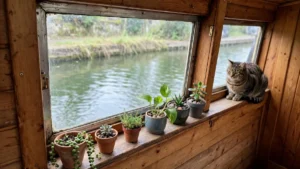
On moving day, take every plant down from its hooks and shelves and put it somewhere low and contained. The kitchen sink is the best travel spot in most tiny houses: it catches spilled soil, and the walls stop the pot sliding. Wedge a rolled towel around each pot so it cannot rock, and close the curtains on the sunny side so a plant does not bake behind glass on the road. The same low, wedged spot works for a plant in a narrowboat, and our guide to caring for a plant in a narrowboat covers the same routine.
Once the house is parked and level again, put the plants straight back in their usual spots. A plant that spends a week on the floor after a move gets forgotten and knocked.

Pick Tough Plants, Then Leave Them Alone
The plants that do best in a tiny house are the forgiving ones. A snake plant is the classic choice: it stores water in its thick leaves, copes with low light and dry stove air, and is happy to be ignored for a week or two. Our guide to snake plant care explains how little it asks for. Pothos trails beautifully from a high shelf, and a small jade plant stands up to the odd knock.
Start with one or two plants and learn how they behave across a week before adding more. Then keep a short routine on the same day each week: test the soil and water only the dry ones, turn each pot a quarter-turn, and look at the leaves for yellowing or crisp edges.
That is the whole secret. Keep plants at living level and off the floor, give each one a permanent spot that nothing else needs, water by the soil rather than the calendar, and plan ahead for moving day. Do those four things, and the smallest house you have ever lived in can still be the greenest.