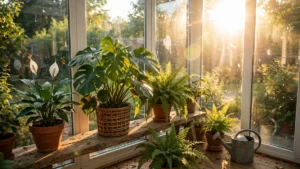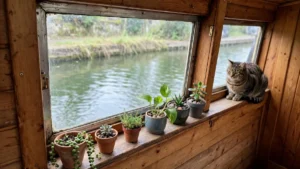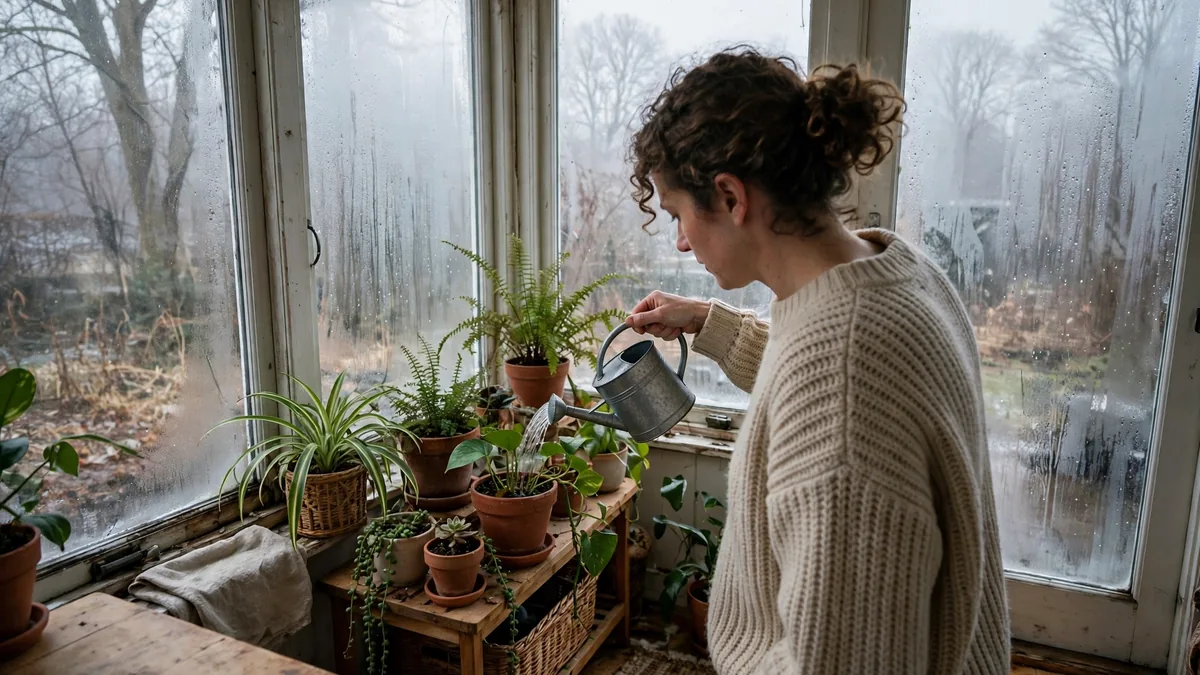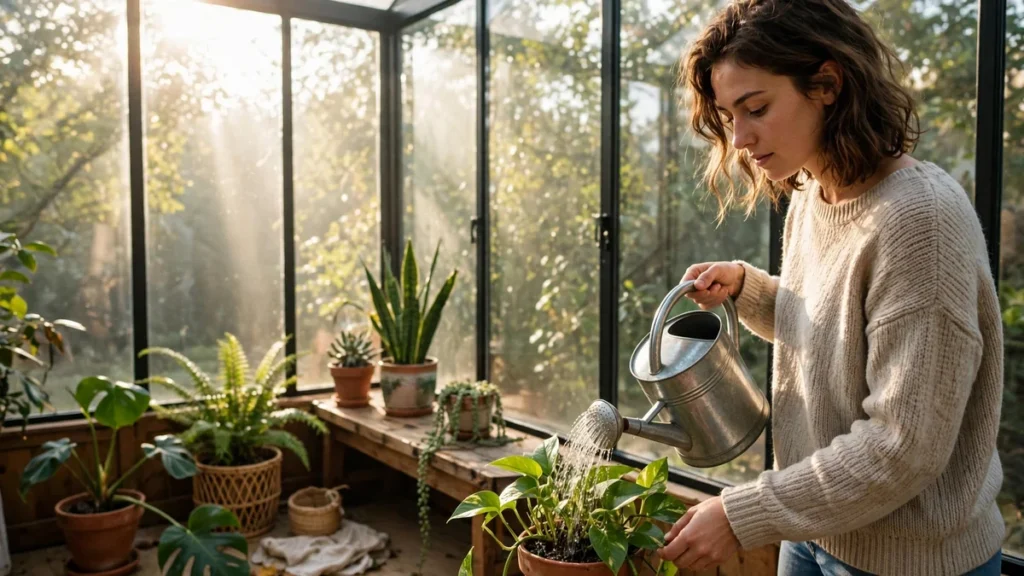
A sunroom is the one room where watering can go wrong in two directions at once. Water too little and the plants dry out fast, because the glass turns the room into a warm box by mid-morning. Water too much, or water the wrong way, and the room itself starts to steam: the windows fog and the air feels damp.
The plants are not the only thing you are watering. Every can adds moisture to a sealed glass room with nowhere to send it. In a living room, a splash dries and is gone. In a sunroom, it stays. The job is keeping the plants watered while keeping the room comfortable to sit in.
Why a Sunroom Steams When You Water
Three things happen in a sunroom that do not happen elsewhere. The glass heats the air fast: on a sunny morning the room can be ten degrees warmer than the rest of the house. The room is sealed, so moisture from wet soil, wet leaves, and full saucers has nowhere to go. And the plants themselves breathe moisture out all day.
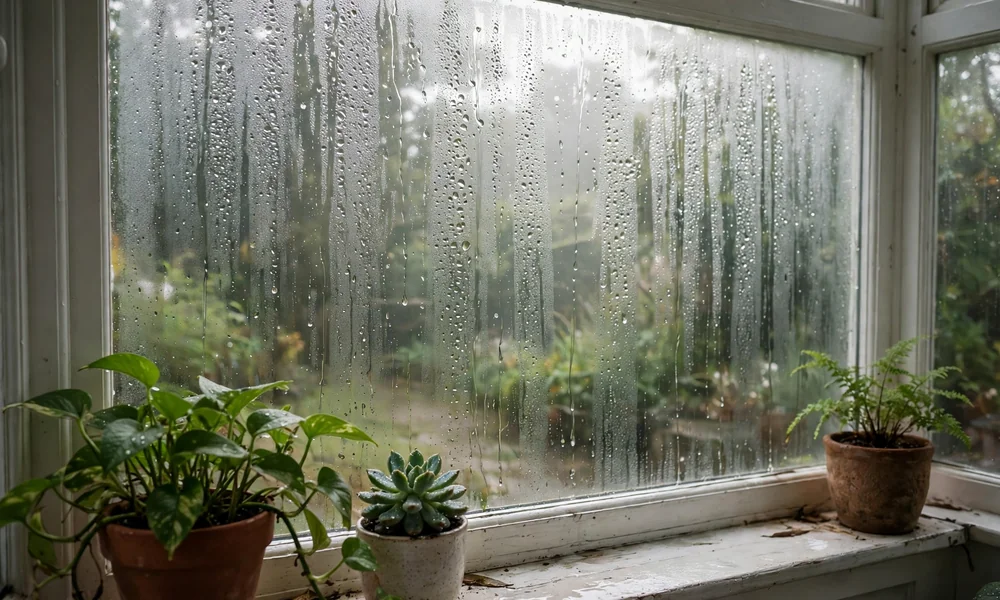
The result shows up on the glass first. A little fog on a cold morning is normal. Glass that stays wet all day, damp frames, or a musty smell are not: the routine is putting more water into the air than the room can clear.
Map the Room Before You Set a Routine
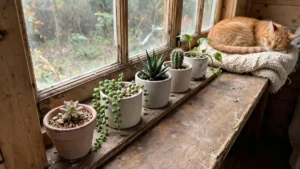
A sunroom is not one climate. It is several small ones sharing a floor. The pot hard against the glass dries from every side at once and can be bone dry while the pot a metre back is still damp. A small pot on a sunny sill may need water every other day in summer; a large pot on the shaded floor may go a week.
Check the soil with your finger, not with the calendar. Push a finger two or three centimetres into the compost: dry at that depth means water, cool and damp means leave it. A fixed watering day will always be wrong for half the room. If you are still choosing what to grow here, our guide to the best plants for a sunroom covers the plants that cope with the heat by the glass.
Water the Soil, Not the Room
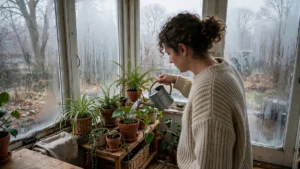
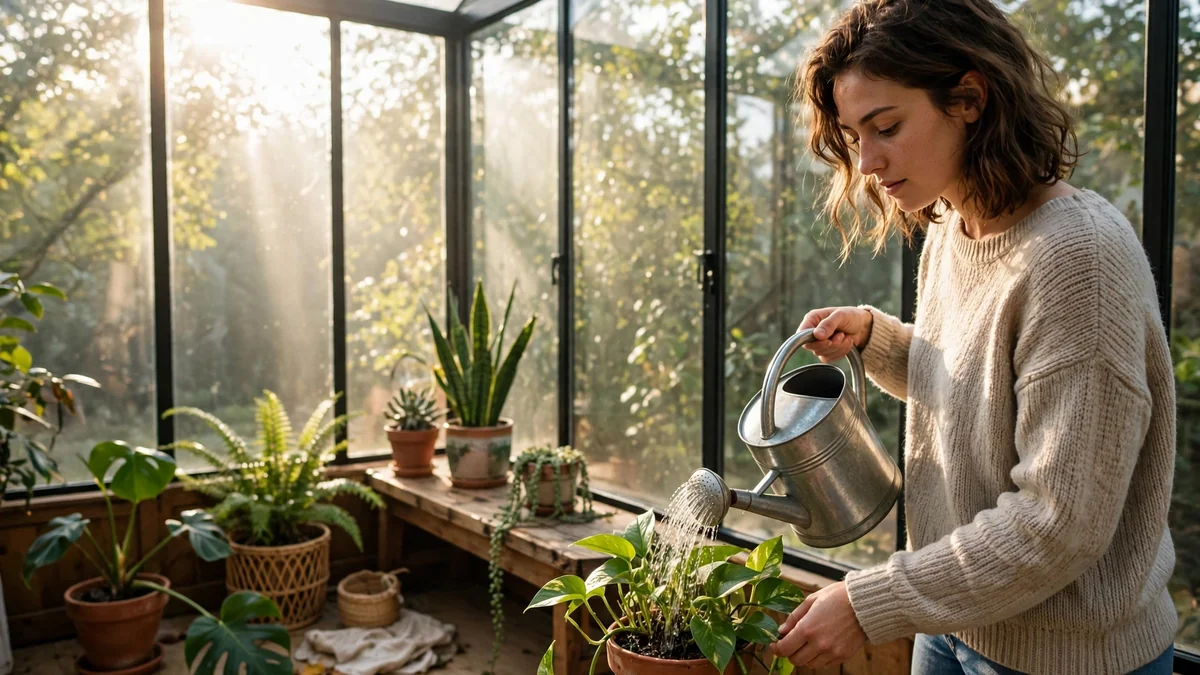
Most of the steam in a sunroom comes from water that never reaches the roots. Water splashed over leaves, misted into the air, or left standing in saucers evaporates straight into the room, while water poured slowly into the soil does not. Use a can with a narrow spout, aim at the soil, and pour slowly enough that it soaks in. Skip the misting bottle: every spray is moisture straight into the air you sit in.
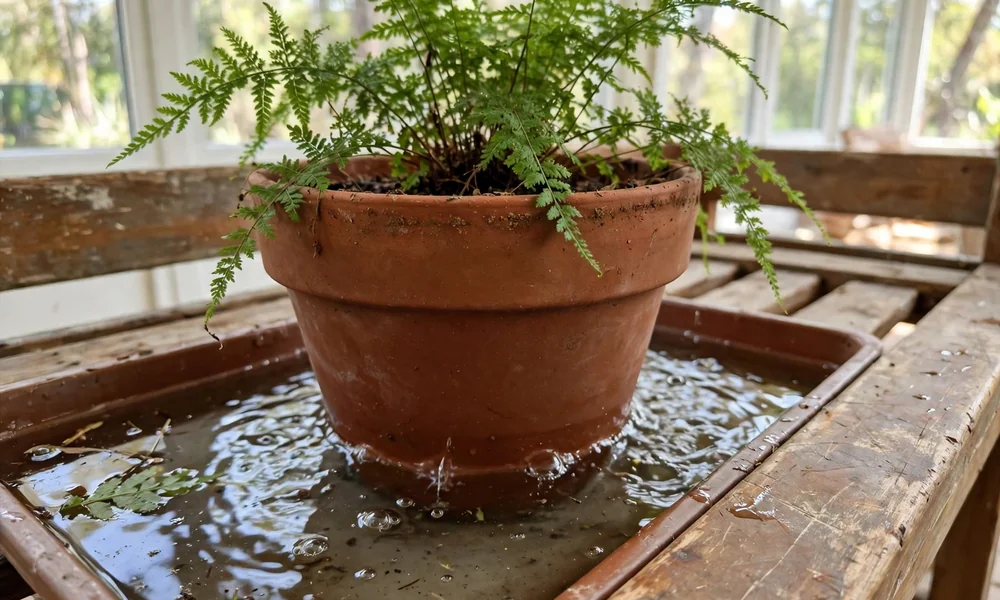
Bottom watering is the best method for a sunroom, because it keeps leaves dry and water off the floor. Set the pot in a tray of water for twenty to thirty minutes, until the top of the soil feels damp, then lift it out and let it drain fully. The soil takes up exactly what it can hold and nothing splashes. It suits ferns and peace lilies. Do not leave the pot sitting in the tray: roots standing in water in a warm room rot fast.
Make Ventilation Part of the Watering
In a sunroom, opening a window is a watering tool. Water in the morning and open a vent or a window while you water, so the damp air has somewhere to go. Watering late does the opposite: wet leaves stay wet all night, which is when mould and fungal spots start. Our guide to the best time of day to water plants explains why morning wins, and under glass it matters twice as much.
How Each Part of the Room Wants Water
Group plants by where they sit, not by what they look like: a thirsty fern in the shade and a succulent baking on the sill need opposite treatment.
| Sunroom zone | How fast it dries | How to water it |
|---|---|---|
| Sunny sill by the glass | Fastest, often daily in summer | Deep morning soak, drain fully |
| Bright bench, back from the glass | Steady, every few days | Bottom water thirsty plants, can for the rest |
| Shaded floor by the house wall | Slowest, stays damp longest | Water rarely, finger-check first |
| Hanging pots near the roof | Fast, warm air rises to them | Take down to soak and drain |
The Summer Rhythm: Shade Is a Watering Tool
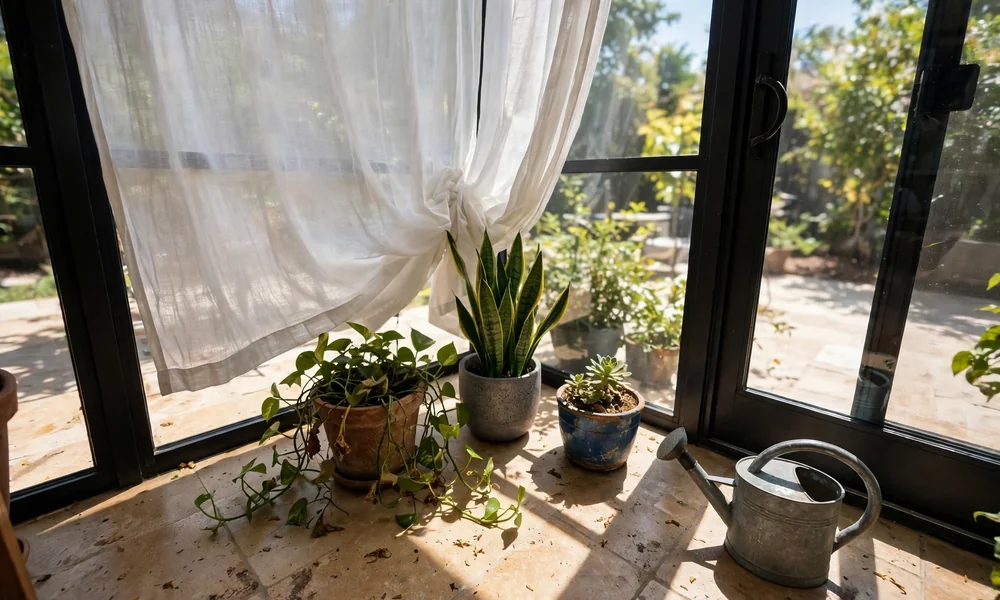
Summer is when a sunroom earns its reputation for killing plants. The glass magnifies the heat, small pots can need water daily, and every watering adds humidity to air that is already warm and heavy. The answer is not more water. It is less sun on the soil. Draw a sheer curtain across the brightest glass through the middle of the day, and the soil will dry half as fast.
Water early, before the heat builds, and check the sunny pots again in the evening rather than drowning them in the morning. A deep soak is right; a pot left sitting in its own runoff is not. Empty every saucer half an hour after watering, every time.
The Winter Rhythm: Dry Air, Cold Glass, Less Water
Winter reverses the problem. Growth slows, the plants use far less water, and the house heating dries the incoming air. The same plant that drank every two or three days in July may go a week or more in January. Water little and rarely, always in the morning, and only when the soil has genuinely dried. Cold, wet soil in winter is the fastest route to root rot, and a plant wilting in damp winter soil usually has rotted roots already.
Watch the glass more than the soil in winter. Warm, damp air from the house meets the cold panes and runs down in drips that chill leaves and invite rot. Wipe the glass in the morning and keep plants off the coldest panes. A sunroom differs from a conservatory here: a conservatory is often a separate glass structure you can leave cool, while a sunroom shares the house heating and air. For the separate glass-room case, our guide on watering plants in a conservatory covers the floor-protection side of the same job.
Signs You Are Steaming the Room
Overwatering and underwatering look alike at first, because both make leaves droop. Yellow, soft lower leaves and a musty smell mean too much water: stop and let the soil dry. Brown, crisp leaf edges and soil shrunk from the pot mean too little: soak the pot until the soil swells back, then drain it. The room warns you too: windows fogged past midday or damp frames mean the routine is putting more moisture into the air than the room clears.
A Simple Sunroom Watering Routine
Walk the room each morning, can in hand, finger in the soil. Water the dry pots deeply, leave the damp ones alone, and open a vent while you work. Empty every saucer half an hour later and draw the sheer curtain before midday in summer. Water the soil, let the air out, and the room stops steaming.