A plant that was happy at home or in the shop can look miserable a week after arriving at your office. A few leaves droop, one turns yellow, and it is tempting to blame the office. Usually the plant is fine. It is adjusting to a new home, and the first week is when most damage is done by well-meaning overcorrection.
It is mostly about reading the room: how much light reaches the desk, where the air-con blows, and how dry the air gets by Friday. Get those roughly right and most office plants sort themselves out.

The First Week Is About Settling, Not Fixing
A plant that has just moved is dealing with a change in light, temperature, and humidity all at once. Some leaf drop or a limp look in the first few days is normal, not a verdict on your care. The worst thing you can do in that first week is keep changing things: moving the pot, repotting it, feeding it, and watering it daily.
Pick one spot and leave the plant there for at least a week. Choose somewhere out of the way of bags and elbows, clear of the air-con vent, and not blocking your screen. Do not repot a newly arrived plant unless the pot is cracked; repotting is another shock on top of the move. Skip fertiliser too — it can burn stressed roots.
Water once on arrival if the top few centimetres feel dry, then watch for a few days: which way the leaves lean, whether the soil dries fast or stays damp, and whether any leaves yellow. Those observations tell you what to adjust next.
Reading Your Office Light
Office light is almost always less than it looks. A bright room lit by fluorescent tubes can still be dim for a plant, because the light is spread across a ceiling rather than coming from a window. Test it with your hand: hold it about 30 centimetres above the leaves at midday. A sharp shadow means decent light; a faint one means low light; almost none means shade.
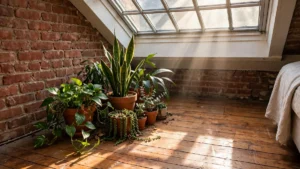
Distance from the window matters more than most people expect. A desk right beside a window gets far more light than a desk two metres away, even in the same room. If your plant is struggling, moving it half a metre closer to the window can help more than anything else. Keep leaves off the glass, which is cold in winter and can scorch in summer sun.
Fluorescent and LED office lights help, but they supplement window light rather than replacing it. If your desk is far from any window, pick accordingly: our guide to low-light indoor plants explains which plants genuinely cope with dim rooms.

Draughts, Air-Con and Heating
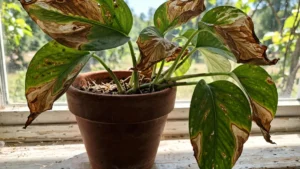
Office air is restless. The air-con vent, the draught from a door that opens all day, and the radiator under the window each push air around your plant. Most indoor plants dislike sudden blasts of cold or hot air on their leaves. The signs are brown leaf edges and curling leaves.
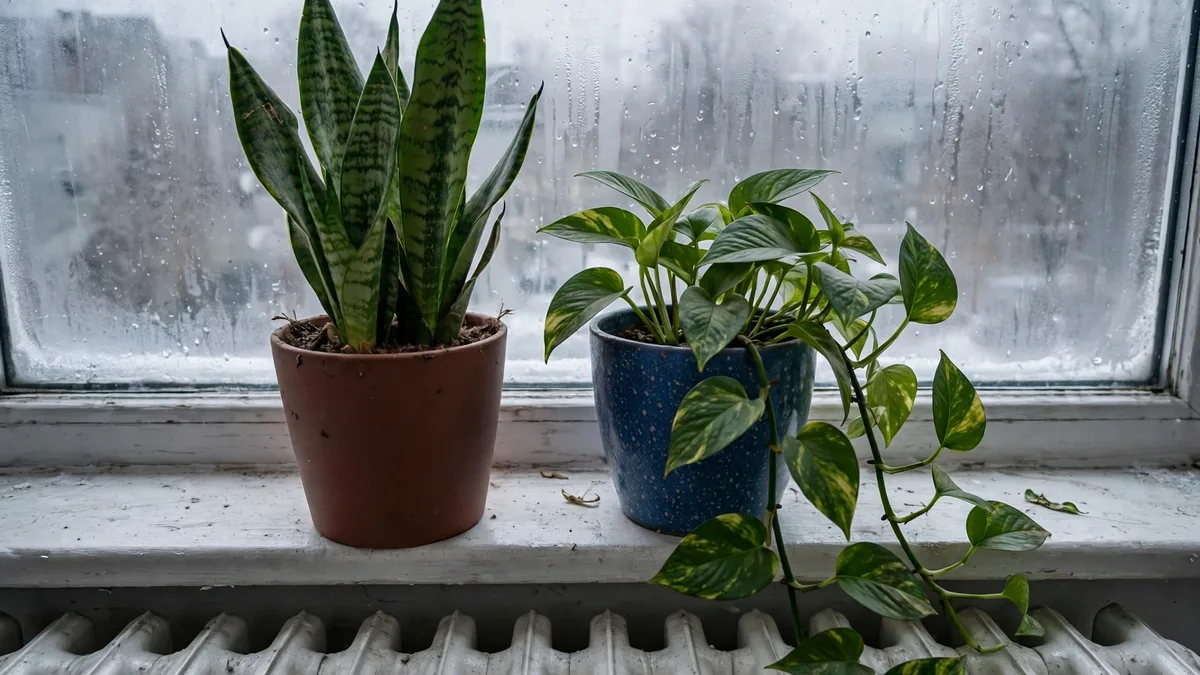
Find the vents before you pick the spot. Hold a thin strip of paper near the vent and the window frame: if it flutters, that is a stream of air your plant will sit in all day. Move the pot a few centimetres to the side and the problem often disappears. The same applies to heat — a plant directly above a radiator dries out from the roots up.
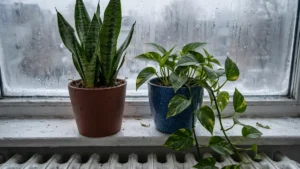
Offices cool down at night and over the weekend, when the heating or cooling is off. A plant on a cold windowsill feels that drop all night, so pull the pot back from the glass on Friday, or stand it on a cork mat. Our guide to plants for a cold office window covers which plants handle that chill best.
A Watering Routine That Fits Work Hours
The most common office plant killer is not neglect. It is a well-meaning colleague who waters the plant every time they pass, or a Monday drench that leaves roots sitting in water until Friday. Office plants do best on a routine built around the working week, and that routine starts with your finger, not a calendar.
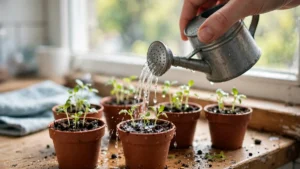
Press a finger into the soil up to the first knuckle. If it feels damp, walk away. If it feels dry, water slowly until a little runs out of the drainage hole, then tip the saucer out after ten minutes. Most office plants need this check once a week. Water in the morning if you can, so the top of the soil dries during the day.
Plan for the gaps. Water the day before a long weekend or holiday, and group pots together so they shade each other and slow evaporation. Away for more than a week, ask a colleague for one finger-test midweek rather than watering on a schedule.

Cleaning the Leaves
Office dust is a quiet problem. It settles on leaves, blocks light, and clogs the tiny pores the plant breathes through. A plant with dusty leaves is getting less light than it already has. Wiping the leaves is one of the cheapest improvements you can make, and it takes less than a minute.
Once a week, wipe broad leaves with a soft, damp cloth, supporting each leaf from underneath so it does not tear. For small or fuzzy leaves, a soft brush is enough. Never use leaf-shine sprays or furniture polish. They look glossy for a day, then clog the pores, and some damage the leaf surface outright.

When Your Plant Sulks After the Move
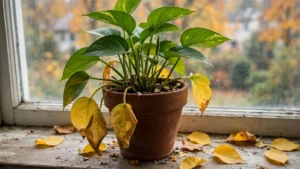
Almost every plant sulks a little after a move. A few lower leaves yellow and drop, growth pauses, and the plant looks less perky than it did in the shop. That is the plant adjusting, not dying. Leave it alone, keep the routine steady, and most plants perk up by the third week.
There is a difference between sulking and struggling. Sulking is a few older leaves dropping while new growth looks healthy. Struggling is new leaves coming out small and pale, stems going soft, or leaves yellowing from the top down. Soft stems and a musty smell point to overwatering: stop watering and let the soil dry right out.
Do not try to fix a sulking plant with everything at once. One change at a time: move it closer to the window, or change the watering, and wait a week. Changing everything at once gives the plant four shocks instead of one. If it is still declining after three weeks of steady care, it may simply be the wrong plant for that desk. Our guide to work desk plants lists tough picks that survive a 9-to-5.
A Five-Minute Weekly Routine
Once settled, the whole job fits into five minutes on a Monday morning. Finger-test the soil and water only if it is dry. Wipe the leaves. Turn the pot a quarter turn so it grows evenly instead of leaning towards the window. Check the vent and the window for seasonal changes. A plant that gets those four things, every week, will outlast the novelty of the new office and become part of it.