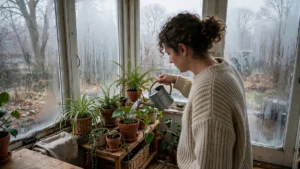
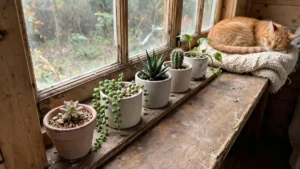
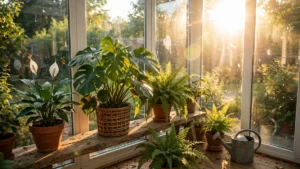
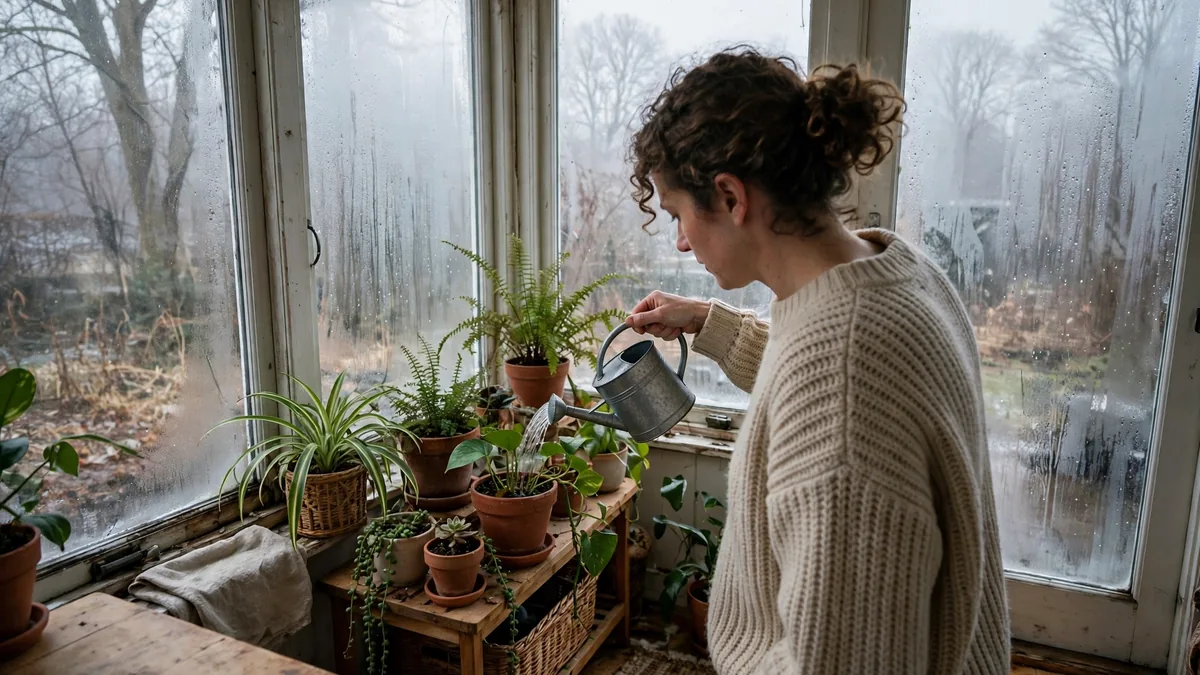
A south-facing window is the brightest spot in most homes, and the hardest one to plant well. For several hours a day the sun comes straight through the glass, the sill heats up, and small pots dry out fast. Plants that love gentle, indirect light will scorch there, fade, or drop their leaves within weeks.
The fix is to fill it with plants that genuinely want that much sun. The seven below all come from hot, bright places, and they do their best work right against the glass, in warm air and fast-drying soil.
What a South-Facing Window Really Does to a Plant
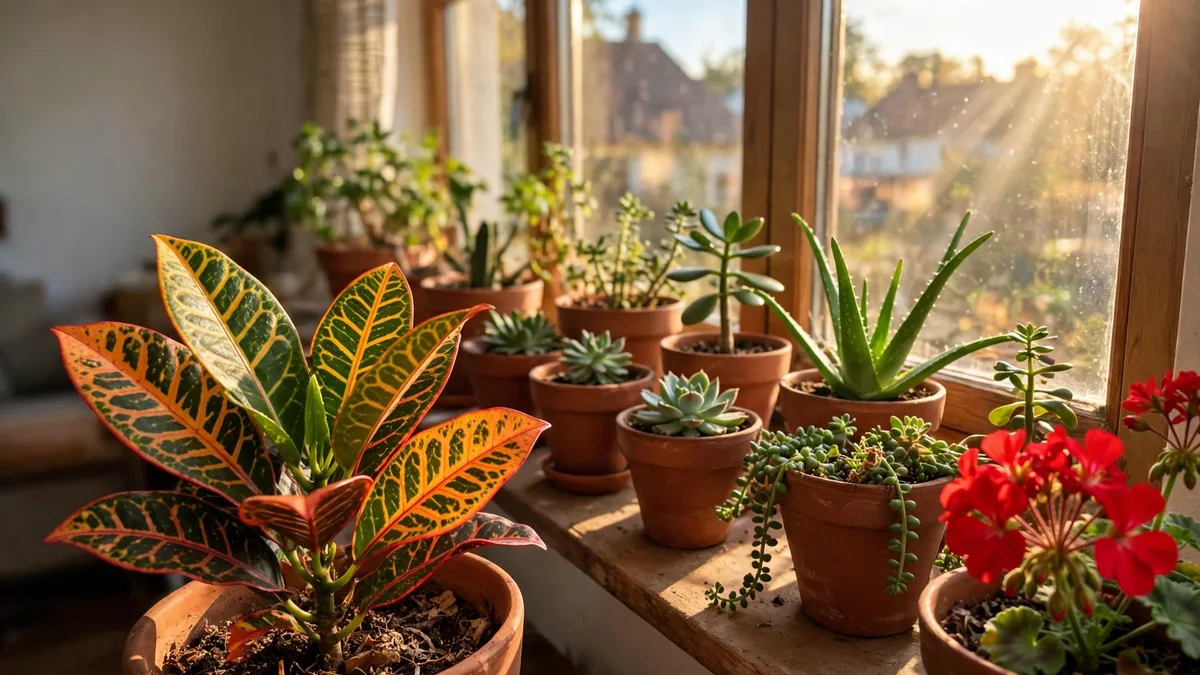
Direct sun through glass is stronger than it looks. The glass traps heat, so the air beside the window can be several degrees warmer than the rest of the room, and a small pot on the sill can dry out in a day in summer. That suits plants that store water, flower in full sun, or grow in dry, open places, and it punishes anything that prefers shade or steady moisture.
Ease new plants in over a week rather than moving them straight onto the glass, and water by checking the soil, never by the calendar.
1. Croton: The Colour Plant
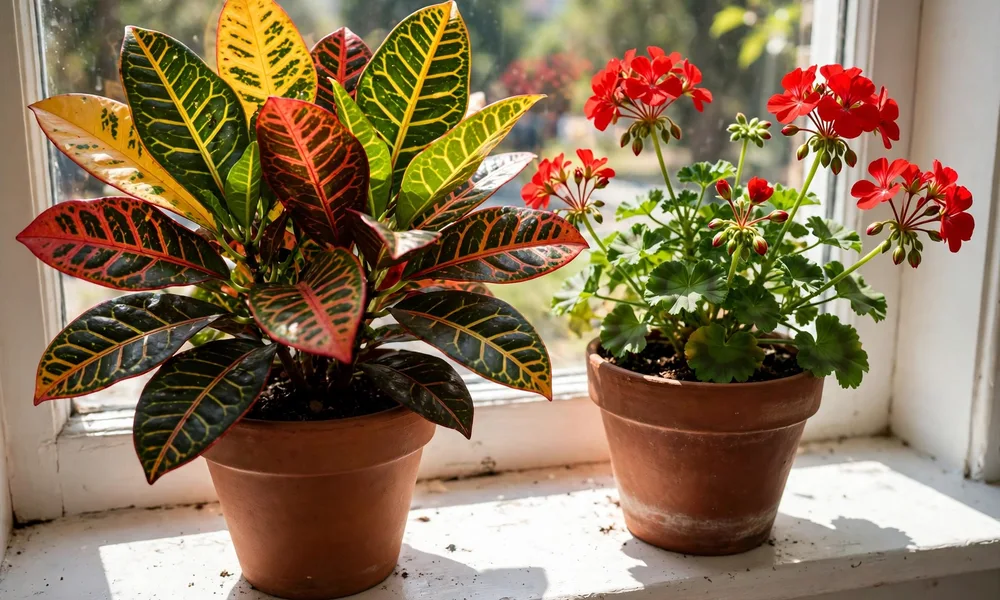
Croton is the plant that proves a south-facing window can be the most colourful spot in the house. Its broad leaves come splashed in red, orange, yellow and green, and the brighter the light, the bolder the colours become. In shade the same plant fades to plain green, so it genuinely needs the sunniest sill you have.
Spot: the sill itself, in a heavy pot so it cannot topple. Light: four to six hours of direct sun a day. Water: keep the soil lightly moist in summer and let the top inch dry between waterings; mist the leaves now and then, and keep it away from pets, as the sap irritates skin and the leaves are toxic if eaten.
2. Geranium: The Flowering Classic
Geraniums flower best when they are slightly uncomfortable, and a hot south-facing window suits them perfectly. Given strong sun they produce clusters of red, pink or white flowers for months, and the scented leaves fill the room when you brush past. Deadhead the spent flower heads and the plant keeps producing new ones.
Spot: the sill or a table right under the window. Light: full direct sun, at least four hours a day. Water: sparingly, only when the top few centimetres of soil feel dry, in a pot with drainage holes; wet soil kills geraniums faster than any amount of sun.
3. Crown of Thorns: The Plant That Flowers in the Heat
Crown of thorns is a succulent that treats a hot window like home. Its thick stems store water, its small red or pink flowers appear almost all year in strong light, and it asks for very little in return. The stems are spiny, so handle it with gloves when you repot it.
Spot: the sunniest end of the sill, where its flowers get full sun. Light: as much direct sun as you can give it. Water: only when the soil is dry right through, in very gritty, free-draining soil; in winter, water once a month or less.
4. Kalanchoe: The Small Plant With Months of Flowers
Kalanchoe is the easiest flowering plant for a south-facing window. Its thick, waxy leaves store water like a succulent, and its clusters of small flowers in orange, pink, red or yellow can last for weeks. When the flowers fade, cut the stems back and the plant will rest, then flower again.
Spot: the sill, in a small terracotta pot. Light: bright direct sun for most of the day. Water: sparingly, only when the soil is completely dry; never let water sit in the leaves, where it can cause rot.
5. Bougainvillea: The Boldest Colour on the List
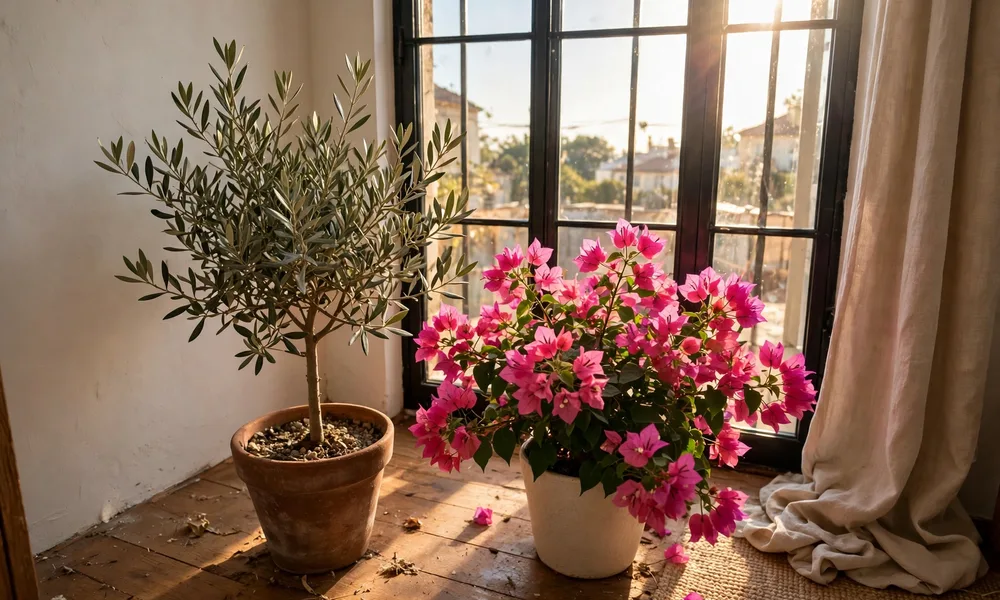
Bougainvillea gives a south-facing window more colour than any other plant here, with masses of bright pink, purple or orange bracts that last for weeks. It is a climber by nature, so give it a small trellis or hoop to grow around, and prune it back after flowering to keep it compact indoors.
Spot: the floor beside the window or a large pot on a stand, where it has room to spread. Light: full direct sun, six hours a day if possible. Water: regularly in summer while it is flowering, much less in winter.
6. Olive Tree: The Slow, Silvery Tree
A small olive tree is the calmest plant on this list. Its narrow, silvery-green leaves suit a bright, airy room, and it loves the dry air and strong sun of a south-facing window in a way most houseplants do not. It grows slowly indoors, so buy the size you want and enjoy it for years.
Spot: the floor beside the window, in a heavy terracotta pot. Light: full direct sun, as many hours as the window gives. Water: sparingly, only when the soil is dry through, in very free-draining soil; it hates wet feet.
7. String of Pearls: The Trailer for the Top of the Window
String of pearls is the trailing plant for a south-facing window. Its bead-like leaves store water, so it copes with the fast-drying air at the top of the window, and its stems can trail a metre or more from a hanging basket. Hang it where the sun falls on the top of the pot, not just on the trailing stems, or the crown will thin out.
Spot: a hanging basket or high shelf at the top of the window. Light: bright direct sun on the crown of the plant. Water: only when the soil is dry right through; overwatering is the one thing that kills it quickly.

Keeping South-Facing Plants Alive Through Summer
The biggest mistake with a south-facing window is watering on a fixed schedule. A plant that needs water every ten days in a normal room may need it every three or four days on a hot sill in July, then go back to ten days in January. Push a finger two inches into the soil: if it feels dry at that depth, water thoroughly until it runs from the drainage holes, then empty the saucer.
Rotate each pot a quarter turn every week so growth stays even instead of leaning towards the glass. If you want more ideas for bright rooms, our guide to the best plants for a sunroom covers the same hot, bright conditions on a bigger scale, and our list of indoor plants that like direct sunlight explains how to care for sun-lovers in general. For a narrower sill in a hallway, the best plants for a sunny hallway window shows which of these sun-lovers fit a smaller space.
Start with two or three of these seven, and add the rest once you know which end of the sill runs hottest. A south-facing window stops being a problem spot the moment it is filled with plants that were built for it.