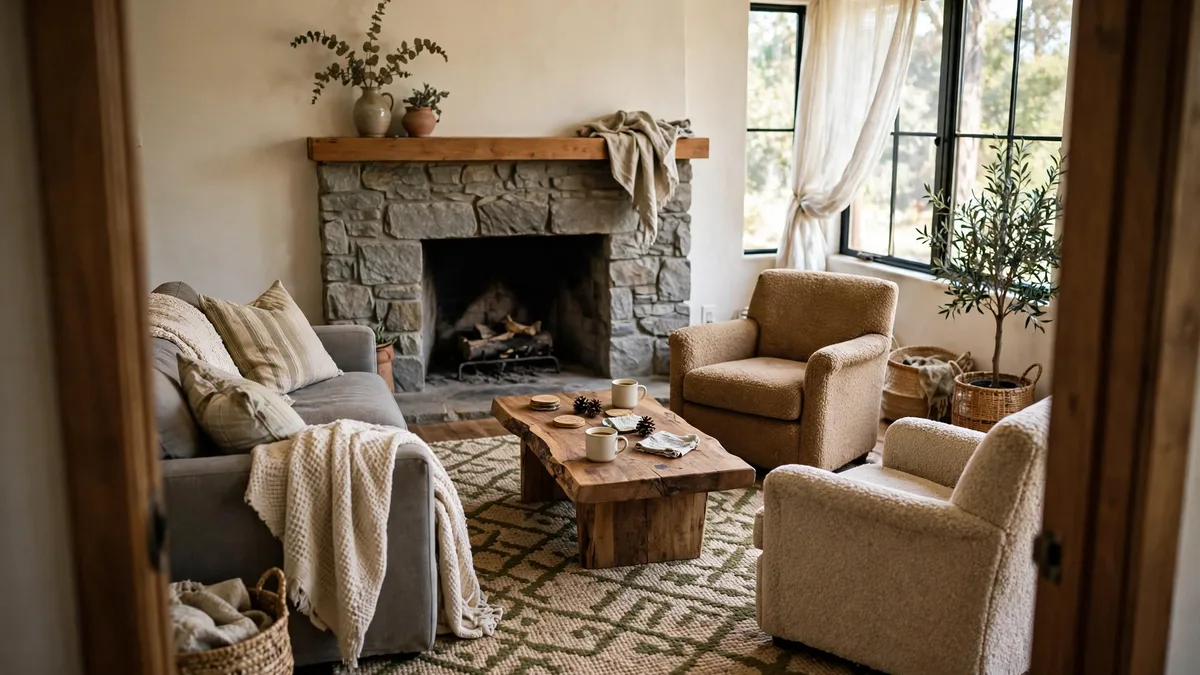
A small apartment does not have to feel small. Mirrors, colour, furniture scale, clear sightlines and layered light can make tight rooms read as open, calm and airy. None of them needs a renovation, and most cost little or nothing. Here are 18 that actually work, with the reason each one fools your eye.

Mirrors and Reflection: Double the Room Without Moving a Wall
1. Hang one large mirror, not lots of small ones. A single mirror at least 24 inches wide reflects a whole view — a window, a plant, an open doorway — and reads as a second window. A cluster of small mirrors chops the reflection into pieces. Why it works: your brain treats a large, clear reflection as extra space.
2. Put the mirror opposite a window. A mirror facing a window bounces daylight deep into the room. Why it works: reflected light is the cheapest way to push the far wall visually further away.
3. Lean a tall floor mirror in a dark corner. A tall mirror leaning against the wall in a corner that never gets sun opens that corner up and adds height. Why it works: dark corners make a room feel like it ends early; a bright reflection erases the dead end.
4. Use mirrored or glass furniture sparingly. A glass coffee table or a mirrored side table shows the floor and rug through it instead of blocking them. One or two see-through pieces are enough. Why it works: your eye measures a room by the floor it can see, and transparent furniture does not interrupt that measurement.
5. Mirror the back of a bookshelf. A mirror panel on the back of an open shelf makes it look deep and bounces light out. Why it works: depth cues come from what you can see behind objects, and a reflective back panel fakes an extra foot of depth.

Colour and Walls: Let the Edges Disappear
6. Paint the walls and trim the same pale colour. When the walls, skirting boards and door frames are one pale colour, the eye slides over the edges instead of stopping at each one. Why it works: fewer visual boundaries mean fewer places for the eye to register that the room ends.
7. Keep one colour flowing through the whole apartment. The same pale wall colour in every room makes them feel connected, so the apartment reads as one larger space instead of several small boxes. Why it works: continuous colour removes the hard stops between rooms.
8. Paint the ceiling a shade lighter than the walls. A ceiling in bright white, one step lighter than the walls, looks higher because light reflects off it more strongly. Why it works: brightness reads as distance, so a bright ceiling feels further away.
9. Hang curtains high and wide. Mount the rod 4 to 6 inches above the frame and wider than the window on each side, with the curtains falling to the floor. Why it works: the eye judges the window by the curtain frame, not the glass, so a bigger frame means a bigger-feeling room.
Furniture Scale: Small Rooms Need Small, Low Furniture
10. Choose low-profile furniture. A sofa with a low back, short legs and slim arms leaves more wall visible above it, which makes the ceiling feel higher. Why it works: visible wall space above furniture is the clearest signal of height in a room.
11. Match furniture scale to the room. In a 10-by-12-foot living room, a 72-to-84-inch sofa fits; a 96-inch sectional swallows the walkways. Measure first, buy second. Why it works: furniture that fits leaves breathing room, and breathing room is what the eye reads as space. For more ideas on right-sized pieces, see our small apartment decor ideas.
12. Pick furniture with legs you can see under. Sofas, beds and cabinets on slim legs let you see the floor continuing underneath them, which stretches the room visually. Why it works: uninterrupted floor is the main way your brain measures how big a room is.
13. Use one statement piece, not five medium ones. One well-chosen armchair or a single bold piece of art gives the eye a place to rest. Five competing medium pieces make the room feel crowded even when the floor is clear. Why it works: a single focal point organises the room, and an organised room feels larger than a cluttered one.

Sightlines and Floors: Keep the Eye Moving
14. Leave the middle of the room empty. Push furniture toward the walls and keep a clear 3-foot path through the centre of the room. It costs nothing and instantly makes a room feel twice as open. Why it works: a clear path is a long sightline, and long sightlines are what make any space feel generous.
15. Show as much floor as possible. Roll up a rug that is too small, remove a chair nobody sits in, and keep the floor visible right up to the walls. A rug large enough for the front legs of the sofa to sit on it also helps, because it defines one calm zone. Why it works: the more floor you can see, the bigger your brain assumes the room must be.
16. Draw the eye to the farthest point. Place something worth looking at at the far end of the room — a plant, a lamp, a piece of art — so the eye travels the full length of the space. Why it works: the eye judges a room by the longest distance it travels, so a destination at the far wall stretches the whole room.
Lighting and Finishing Touches: Bright, Layered, Uncluttered
17. Layer three kinds of light. Combine ceiling light, a floor lamp and a table lamp instead of relying on one harsh overhead bulb. Warm light in the evening keeps the corners from going dark. Why it works: dark corners shrink a room, while even, layered light makes every wall feel present. If you are renting, our renter-friendly DIY ideas for apartments include lighting swaps you can undo in minutes.
18. Edit ruthlessly and keep surfaces clear. Every object on a surface is a visual interruption. Keep coffee tables, shelves and counters mostly clear, and store the rest out of sight. A room with ten visible objects feels bigger than the same room with fifty. Why it works: clutter breaks the room into dozens of small visual pieces, while clear surfaces let the eye take in the whole room at once. The same less-is-more thinking is what makes a home feel polished, as our guide to how to make your home look expensive on a budget shows.

Start With the Free Tricks
You do not need to do all 18 at once. Start with the free ones: clear the middle of the room, show more floor, move the mirror opposite the window, and edit the clutter. Then add the cheap wins — curtains hung high, a pale paint colour, a low-profile piece of furniture. Each trick helps a little on its own; together they change how the whole apartment feels.