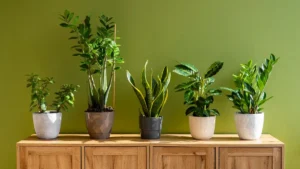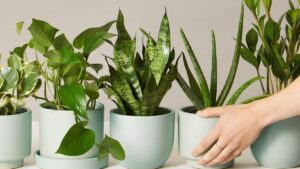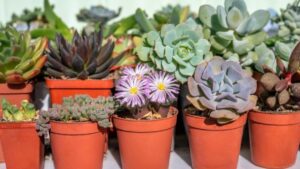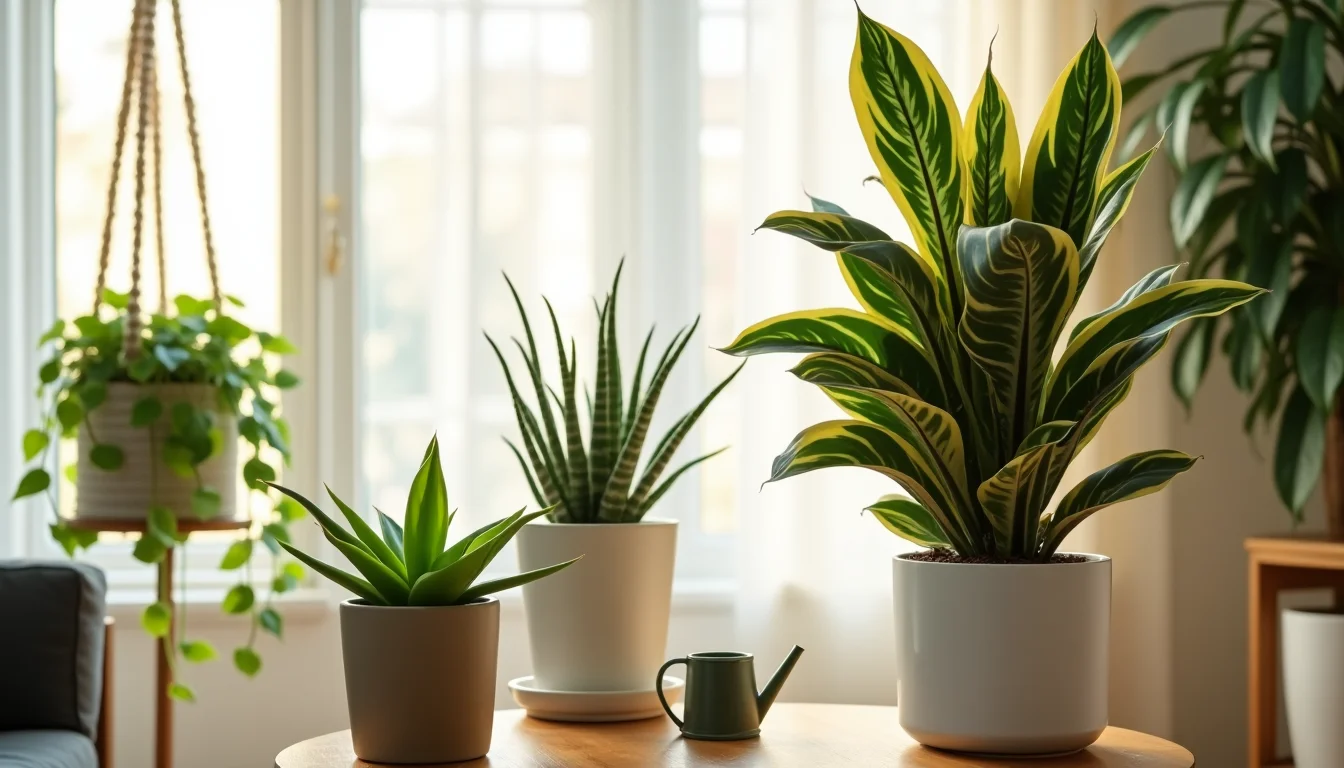
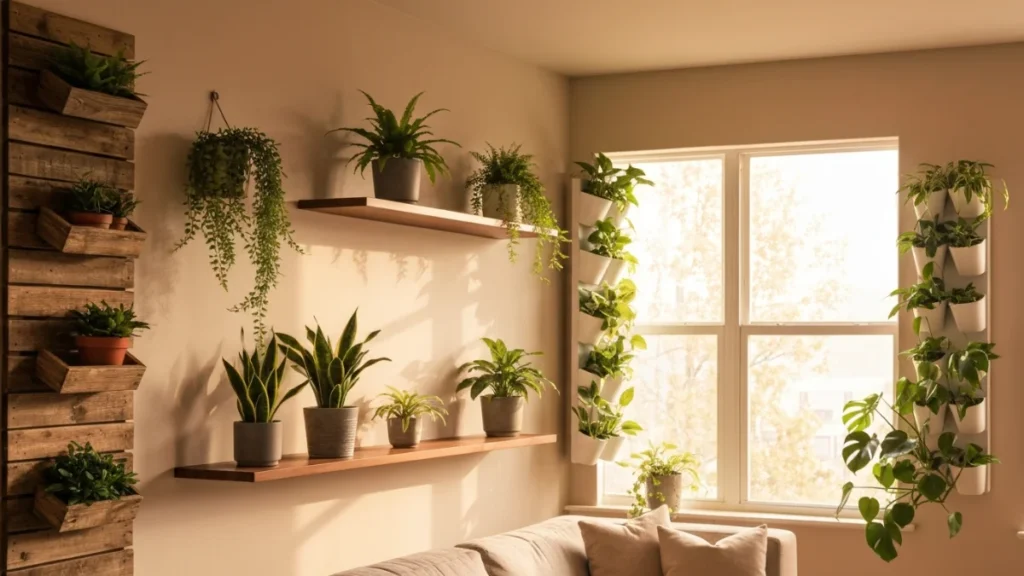
If you’re looking for indoor plant shelf ideas that not only beautify your space but also elevate your plant care routine, you’re in the right place. Indoor plant shelving is a functional and stylish way to bring nature into your home, whether you’re working with limited space or simply want to add greenery to your décor.
This guide will explore practical tips and plant shelf design ideas to help you create a personalized, organized, and thriving plant display.
1. Plant Placement by Light Zones
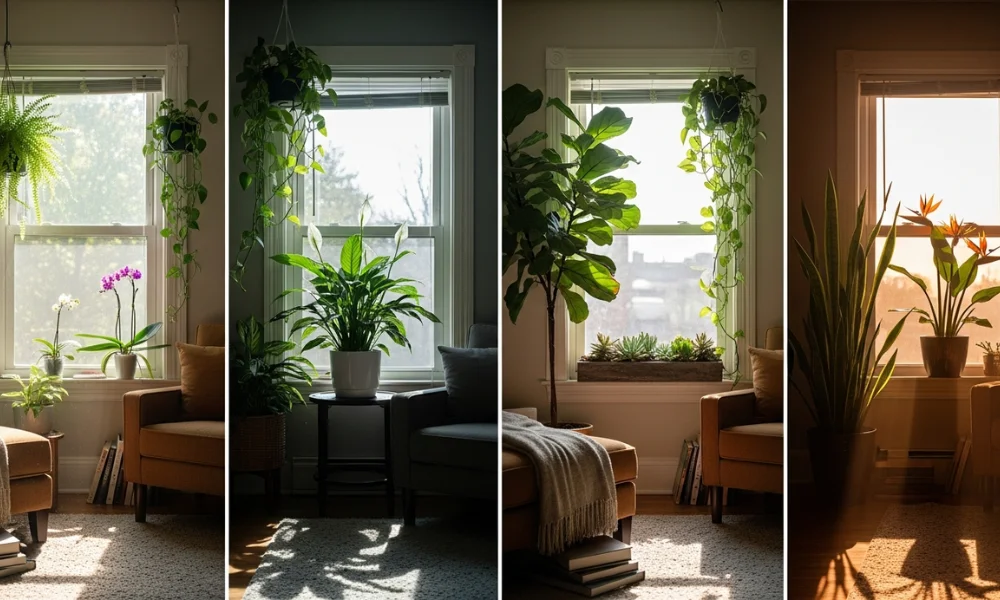
When planning your indoor plant shelf, understanding light zones is crucial. Different plants have varying light needs, so it’s essential to match your plant placement to the type of light they require. Here’s a quick breakdown of light zones in your home and how to use them to your advantage.
Understanding Light Zones: Indoor Plant Shelf Ideas
Your home has four light zones, each offering varying degrees of sunlight exposure. Knowing how to align your plant shelves with these zones ensures healthier plants.
-
North-facing windows: Perfect for low-light plants like ferns or peace lilies.
-
East-facing windows: Ideal for moderate-light plants like succulents or spider plants.
-
South-facing windows: These provide the brightest, most intense sunlight.
-
West-facing windows: Suitable for plants that can handle direct light, like herbs.
How to Choose the Right Shelf for Each Zone
Now that you’ve identified your light zones, selecting the right type of shelf for each is important. For north-facing shelves, floating plant shelves work best as they keep plants a bit further from the light, ideal for shade-loving plants. In east-facing areas, vertical plant displays are perfect for plants that thrive in moderate light.
For south and west-facing shelves, wall-mounted plant racks offer flexibility, allowing you to adjust the position of plants depending on changing sunlight patterns. This will ensure your plants always get the optimal exposure.
Maximizing Light Exposure
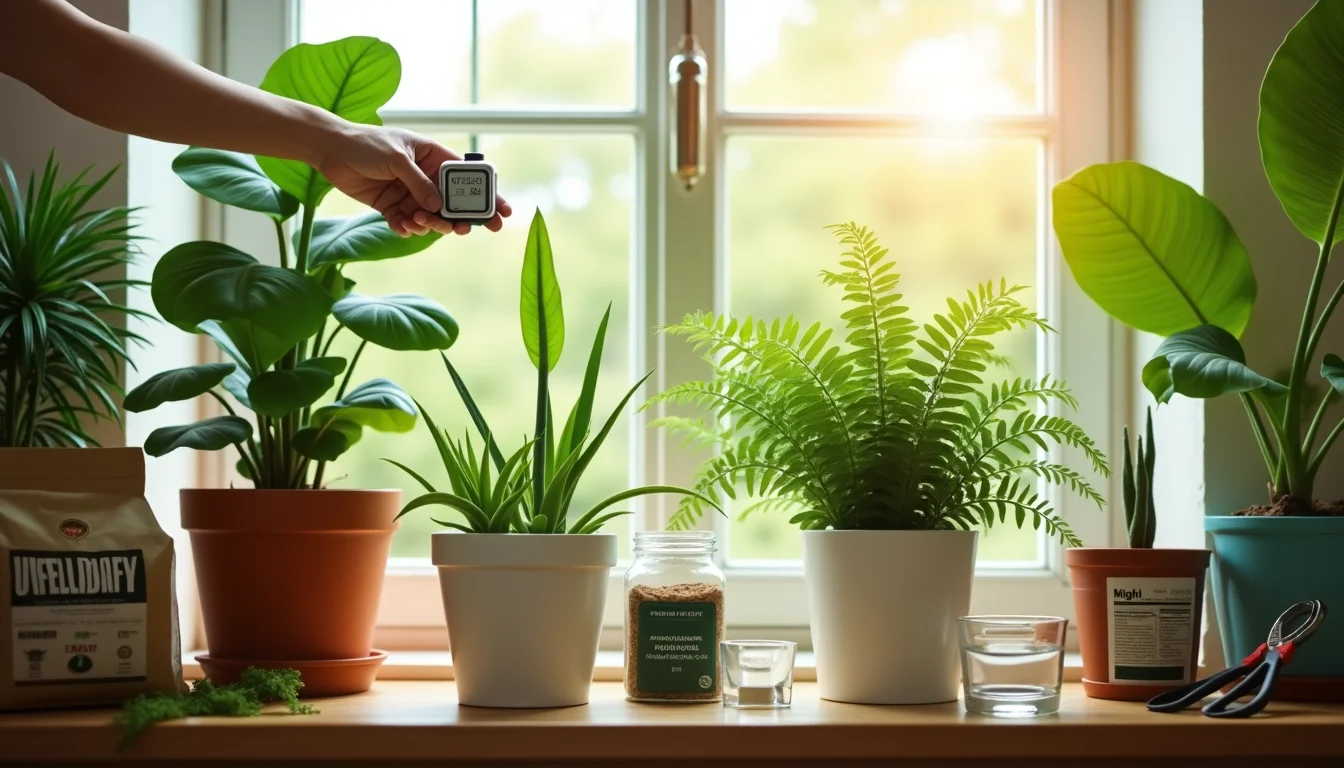
To ensure your plants get the best light, use a light meter to measure light intensity in different areas of your home. If you find that your space lacks sufficient natural light, consider adding grow lights to supplement the sunlight. These can easily be incorporated into your DIY plant shelf plans, adding functionality to your display while keeping your plants healthy.
2. Safety and Installation: Indoor Plant Shelf Ideas
Proper installation is crucial for a safe and functional plant shelf setup. Ensuring your shelves can handle the weight of your plants and are installed securely will prevent accidents and keep your display looking great.
Choosing the Right Materials
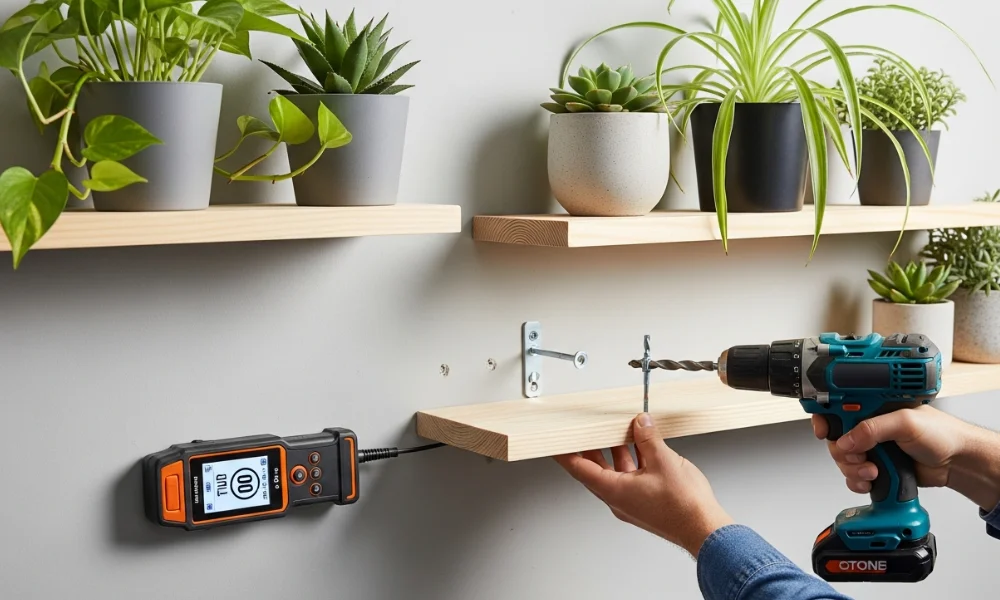
The material you choose for your shelves impacts both their durability and style. Wooden shelves add a warm, classic touch but may require additional support, especially when holding multiple plants. Metal shelves are stronger and sleek, but they should be thick enough to bear the weight of heavy plants.
Anchoring Your Shelves Properly
To avoid accidents, always anchor your shelves properly. If possible, mount them directly into the wall studs. Use a stud finder to locate the studs before drilling for a secure fit. If you’re unable to mount into studs, drywall anchors are an effective alternative, but be sure to choose strong, heavy-duty anchors designed for the weight you intend to support.
Preventing Damage
Water damage is another common issue for plant shelves. To protect your shelves and walls, consider applying a water-resistant sealant to wooden shelves. This adds an extra layer of protection and makes cleaning up water spills easier. You can also use drip trays underneath your plants to catch any excess water, keeping your shelves safe from moisture.
3. Simple Tips for Long-Lasting Indoor Plant Shelf Ideas
Maintaining your indoor plant shelves ensures they stay functional, organized, and aesthetically pleasing for years to come. Here are some simple but effective tips to keep your shelves and plants in top shape.
Watering Access and Drip Management
One of the biggest challenges with plant shelves is managing water drainage. Excess water can damage both your shelves and your plants. To minimize this, consider investing in self-watering systems or watering globes. These help regulate watering frequency and prevent overwatering.
Additionally, using drip trays under each plant is a simple and effective way to protect your shelves from excess moisture. Plant mats are also a great option, especially for wall-mounted plant racks, as they absorb water and prevent it from spilling onto your shelves.
Regular Plant Rotation and Pruning
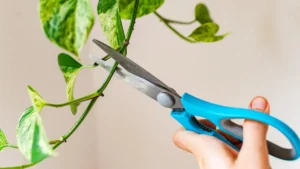
Regular rotation helps ensure even growth, while pruning removes dead leaves and stems, encouraging fresh growth. This is particularly important for plants on vertical plant displays, as the compact nature of these setups can sometimes result in uneven growth.
Rotating your plants every couple of weeks ensures they receive equal light exposure from all sides. Pruning should be done as needed to keep plants healthy and tidy. This simple task can significantly enhance the appearance of your plants and prevent overcrowding on your shelves.
Pest Prevention Tips for Indoor Plant Shelf Ideas
When plants are grouped closely together, pests can quickly spread. Regularly inspecting your plants for signs of pests like aphids or spider mites will help you catch any issues before they become widespread.
If pests are detected, treating the plants with organic solutions like neem oil can eliminate them without harming your plants. Spacing your plants out on the shelf can also reduce the risk of pests and improve airflow, which is crucial for healthy growth. For more information on handling specific pest infestations, such as scale infestation on plants, check out our detailed guide.
Seasonal Adjustments for Plant Shelves
As the seasons change, so do the light conditions in your home. During the winter, natural light can be limited, so you may need to move your plants closer to windows or supplement with grow lights. In the summer, it’s essential to adjust your plant placement to prevent overheating or sunburn.
Conclusion: Creating Your Ideal Indoor Plant Shelf Ideas
Incorporating indoor plant shelf ideas into your home is a simple yet effective way to enhance both your décor and your plant care routine. With a little effort, you can create a green haven that not only looks beautiful but also promotes healthy plant growth. Whether you’re designing a vertical plant display, the key is to consider light, installation, and maintenance.
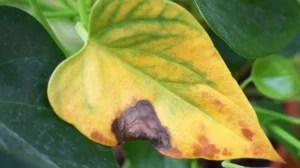
By understanding light zones, choosing the right materials, and following basic care tips, you can create a plant display that is both functional and beautiful. If you’re looking to improve the health of your plants, particularly with issues like peace lily brown leaves, incorporating the right care into your routine will keep your indoor garden thriving. Start planning your plant shelves today and enjoy the many benefits of having nature right at your fingertips.
FAQs:
What types of plants are best for indoor shelves?
Low-light plants like ferns, pothos, or peace lilies work well in spaces with indirect sunlight. Sun-loving plants like succulents and cacti need bright, direct light to thrive.
How do I make a DIY plant shelf at home?
For a DIY plant shelf, gather materials like wood, screws, and brackets. Measure the space, cut the wood, and attach the brackets to the wall. Seal wooden shelves with a water-resistant coating for added protection.
Can I use floating shelves for heavy plants?
Floating shelves can work for light to medium plants, but ensure they are securely anchored into wall studs. For heavy plants, consider using metal or tiered shelving for better support.
How do I prevent my plant shelf from getting damaged by water?
Use drip trays under your plants and apply a water-resistant coating to wooden shelves. Plant mats are also effective in absorbing water and preventing spills.
Can I adjust my plant shelf setup throughout the year?
Yes! Adjust your plant placement to account for changing light conditions. Move plants closer to windows during the winter or use grow lights when needed.