Cheap flowers get a bad reputation they do not deserve. People picture thin stems and a bunch that wilts by the next morning, but some of the least expensive blooms are also the toughest, the longest lasting and the easiest to arrange. This guide ranks the cheapest flowers by type, explains when each one is at its best, and shows how to make a low-cost bunch look like it came from a florist.
Price is mostly about supply. A flower that grows quickly, travels well and is in season right now will always cost less than one flown in from another hemisphere in the wrong month. That is why the cheapest flowers change through the year, and why the smartest way to save is to buy what is plentiful this week.
The Cheapest Flowers, Ranked by Type
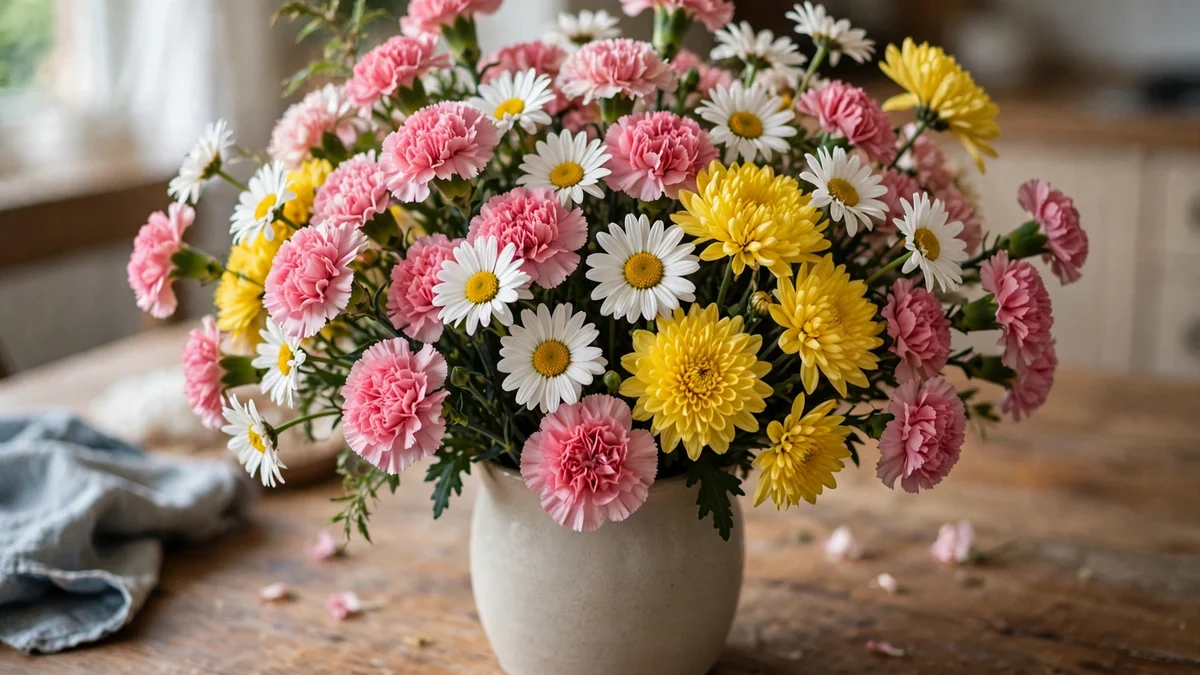
Carnations sit at the top of almost every cheap flowers list, and for good reason. They are grown in huge numbers, come in nearly every colour, and a single bunch fills a vase on its own. They also last longer than most cut flowers, often a week or more, which makes them the best value per day of any budget bloom. Buy them in one colour for a clean, deliberate look.
Chrysanthemums, often sold as mums, are the other great workhorse. A single stem opens into a spray of small blooms, so three or four stems can look like a dozen flowers. Button mums are especially good value and hold up well in a vase, even in a warm room.
Daisies are cheap, cheerful and hard to get wrong. White daisies with yellow centres brighten any room and pair well with almost everything else on this list. They do not last as long as carnations, so buy them with tight, fresh-looking centres and use them within a few days.
Alstroemeria, also called Peruvian lilies, are one of the best-kept secrets among cheap flowers. Each stem carries several small lily-like blooms that open in turn, so the bunch looks better on day three than on day one, and the vase life is among the longest you will find at a low price.
Sunflowers are cheap in summer and look far more expensive than they are, because three stems are enough to fill a vase. Buy them when the heads are still slightly cupped rather than fully flat and open, and keep the stems long so the arrangement has height. For a fuller picture of what different blooms usually cost, see our guide to how much flowers cost.

Mid-Priced Flowers That Are Still Good Value
Not every flower on a budget list has to be the absolute cheapest. Some slightly pricier blooms earn their place because so few stems are needed. Tulips are the classic example: a small bunch in spring looks generous, and their clean lines suit a modern vase. They keep growing after they are cut, so expect them to lean and curve, which is part of their charm.
Lilies work the same way. One or two stems open into several large blooms, so a lily arrangement looks full with far fewer stems than a rose arrangement would need. Asiatic lilies are the better budget choice, since they are usually less expensive than Oriental lilies and have no strong scent. Ordinary garden roses, bought in season and in one colour, can also look surprisingly luxurious.
When Cheap Flowers Are Cheapest: A Season Guide
Season is the single biggest lever on flower prices, and it is the one most people ignore. Tulips and daffodils are at their cheapest and freshest in spring, when they are everywhere. Sunflowers and zinnias take over in summer, when long days and warm weather make them plentiful. Chrysanthemums and asters are the autumn bargains, and they last well in cooler rooms. In winter, carnations, alstroemeria and lilies are the reliable low-cost choices, because they are grown year-round and travel well.
The most expensive weeks are the days around Valentine’s Day and Mother’s Day, when demand for roses and mixed bouquets peaks. If you need flowers then, buy a few days early or choose carnations or tulips instead of roses. A flower bought out of season is not just more expensive, it is usually less fresh, because it has travelled further and been stored longer.

How to Make Cheap Flowers Look Expensive
The difference between a bunch that looks cheap and one that looks expensive is rarely the flowers. It is the arranging. Start by buying bunches rather than single stems: ten stems of one flower always look more deliberate than three stems each of three different flowers. One star flower and one filler is enough for most vases.
Colour discipline is the second trick. A vase of white carnations with a little greenery looks calm and expensive, while the same carnations mixed with four other colours can look muddled. Pick one colour, or two shades of the same colour, and let the shape of the flowers do the talking.
Cut every stem at a diagonal angle before it goes into the vase, and strip off any leaves that would sit below the waterline. Leaves in the water rot quickly and cloud it, which is the fastest way to make fresh flowers look tired. Fill the vase only two-thirds full, and change the water every two days. A clean vase and fresh water matter more than flower food.
Vessel choice does a surprising amount of work. A tall, narrow vase makes a small bunch look generous, because the stems stay upright and close together. Avoid a vase that is far wider than the bunch, because the stems will splay outwards and the arrangement will look thin. For step-by-step ideas that use these same low-cost bunches, see our DIY bouquet ideas on a budget.
Cheap Flowers to Avoid
Not every low price is a bargain. Skip any bunch with brown edges on the petals, soft or slimy stems, or water that looks cloudy in the shop bucket. Those flowers are already fading. Also skip flowers that are fully open in the shop: a rose or lily that is already wide open will drop its petals within a day or two, while a tight bud will open at home and last far longer.

A Simple Cheap Flower Formula
If you want a reliable formula, here it is. Choose one flower from the cheapest list above, in season, in a single colour. Add one filler, either greenery or a second bunch of the same flower in a paler shade. Cut the stems diagonally, strip the lower leaves, and put them in a clean vase that fits the bunch snugly. That is all it takes, and the result will look like far more than it cost.
Cheap flowers are not a compromise. They are the flowers that grow easily, last well and suit everyday life. Learn which ones are in season, buy them fresh, and arrange them with a little care, and you will rarely need to spend more. If you are starting from grocery-store bunches, our guide to how to make a bouquet with grocery store flowers walks through the whole process from shop to vase.