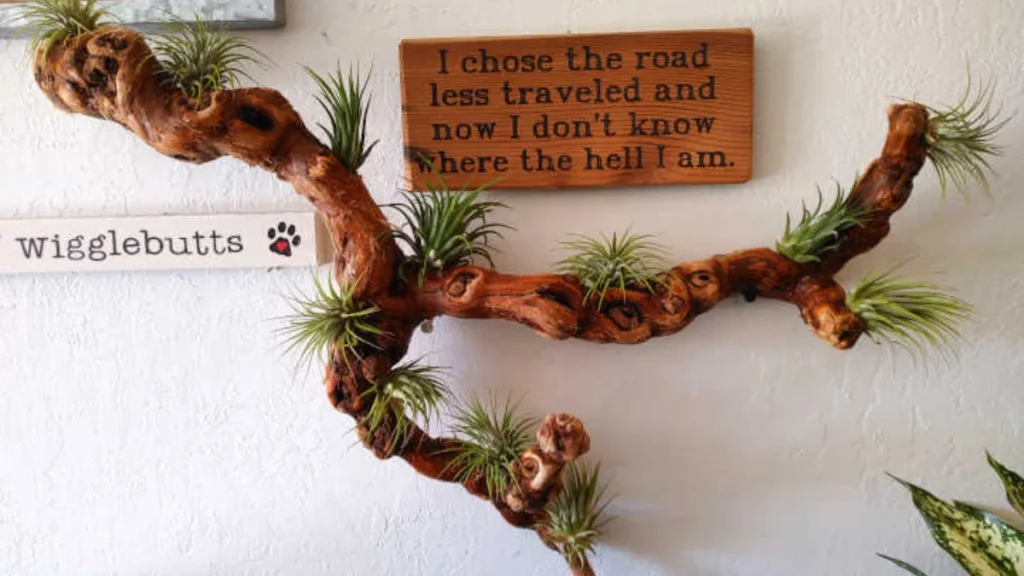
Air plant display ideas have become a favorite choice for homeowners who want greenery without clutter, soil, or heavy maintenance. Unlike traditional houseplants, tillandsia air plants adapt easily to creative setups, making them ideal for modern American interiors where space, light, and flexibility matter.
At the same time, not every display supports long-term plant health. Many popular ideas look appealing but fail quietly over time due to poor airflow or difficult care routines. This guide focuses on displays that look intentional while still supporting healthy growth. Rather than overloading you with trends, it highlights what actually works in real homes.
Let’s begin with displays that naturally elevate both the plant and the space.
Air Plant Display Ideas That Work Best for Hanging Spaces
Hanging displays are often the first option people choose for air plants, and that choice usually comes naturally. They free up surface space, improve airflow, and soften modern interiors without adding visual clutter.
Hanging Air Plant Display Options for Plant Health
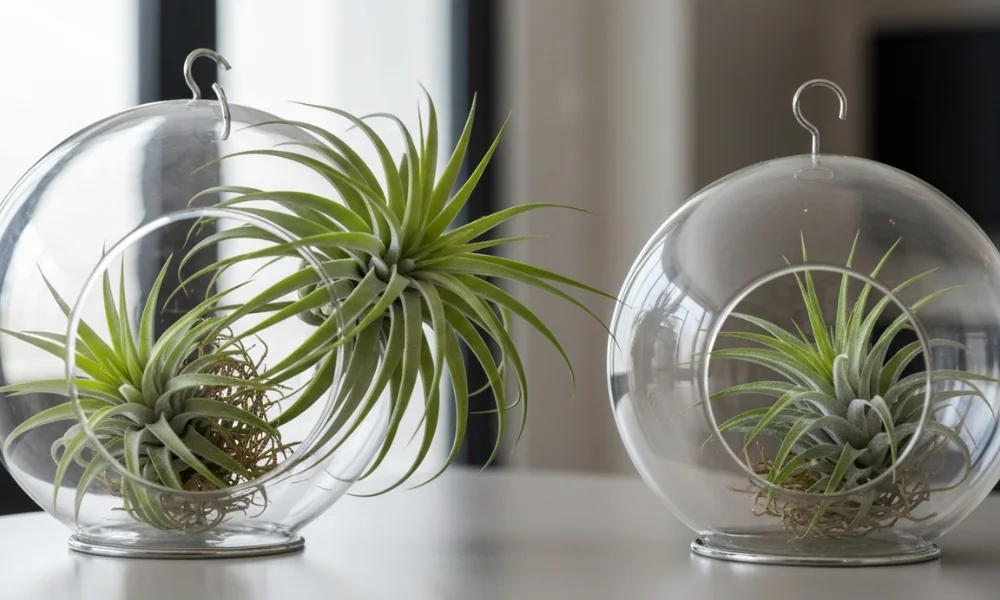
A well-designed hanging air plant display does more than serve as decor. It supports steady air circulation, helps moisture dry properly, and makes regular care far easier to maintain.
The most reliable hanging options include:
-
Open glass globes with side openings
-
Lightweight wire holders
-
Minimal macramé cradles that don’t trap water
Unlike closed terrariums, these designs allow plants to dry quickly after watering. That faster drying process greatly reduces the risk of rot, which is especially important for tillandsia air plants.
Where Hanging Displays Perform Best Indoors
Placement matters just as much as the display itself. Hanging air plants tend to do best when placed:
-
Near east- or south-facing windows with filtered light
-
In kitchens or bathrooms where natural humidity is present
-
Away from HVAC vents and ceiling fans
Because hanging displays sit higher in a room, they often receive better light than tabletop arrangements. For that reason, they work particularly well for indoor air plant decor in apartments or homes with limited window space.
Hanging Displays That Fit Real American Living Spaces
In smaller homes or apartments, visual balance becomes important. Displays should feel light and intentional rather than heavy or overwhelming. Clear materials, thin wire, or neutral cords help the plant stand out without dominating the room. Most importantly, the plant should be easy to remove for soaking.
Wall-Mounted Air Plant Display Ideas
While hanging styles feel flexible, wall air plant ideas add intention and balance. They’re particularly effective in modern interiors where vertical elements help define the space.
Why Wall Displays Need Better Airflow Than Pots
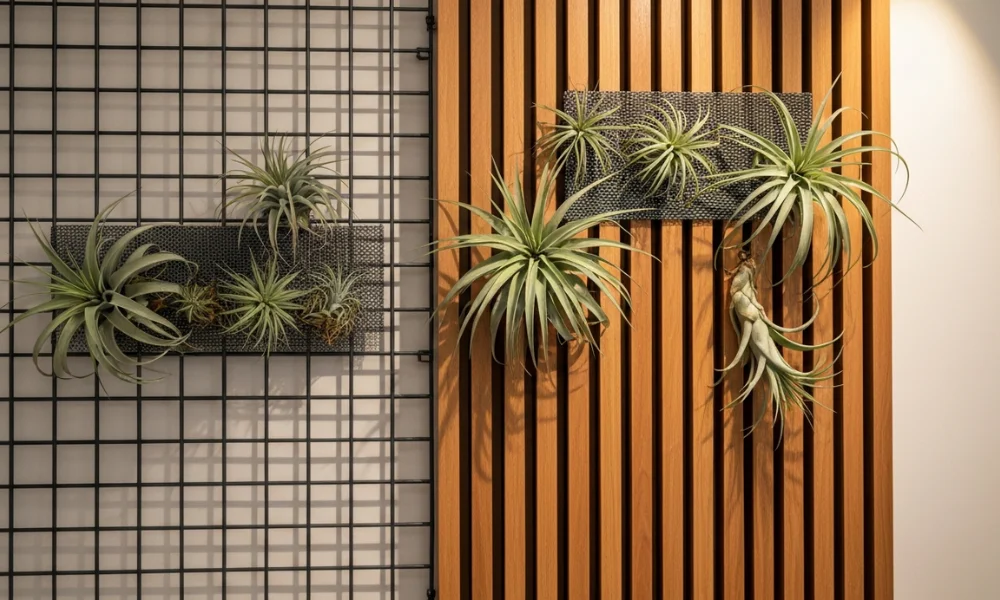
Unlike planters, wall-mounted air plants rely entirely on airflow to stay healthy. When mounted flat against solid surfaces, trapped moisture becomes an issue. Designs that allow space behind the plant dry faster after watering and reduce stress on the leaves an important detail many competitors overlook.
Where Wall Air Plant Display Ideas Perform Best Indoors
Placement matters more than design. Wall displays perform best in living rooms, home offices, and entryways with steady indirect light. In contrast, dark hallways or heat-exposed walls slowly weaken plants, even if the display looks attractive at first. For indoor air plant decor, consistent light always matters more than visual symmetry.
Creating Creative Air Plant Arrangements on Walls
Balanced irregularity works best. Slightly staggered placements and varied plant sizes prevent the display from feeling rigid. At the same time, plants should remain removable, since fixed installations often lead to skipped care over time.
DIY Air Plant Holder Ideas for Creativity and Care
DIY displays add personality, but they also require intention. Many air plant display fail because they prioritize decoration over plant needs.
Why Air Plant Holder Designs Need Intentional Simplicity
A successful DIY air plant holder keeps the plant lightly supported, not confined. Overly decorative materials often block airflow or hold moisture. Simple structures dry faster and make soaking easier, which improves consistency.
Just as importantly, DIY holders should never permanently fix the plant in place. Displays that restrict removal often lead to uneven watering and long-term decline.
Materials That Work Best for Long-Term Indoor Use
Breathable materials perform best indoors. Natural wood, unfinished clay, wire, and ceramic rings adapt well to indoor conditions and complement modern interiors. In contrast, sealed or painted surfaces often shorten plant lifespan by trapping moisture.
For American homes with climate control, breathable materials consistently outperform trend-driven designs.
Where DIY Holders Fit Best Inside the Home
DIY holders work well on desks, floating shelves, kitchen counters, and bathroom ledges. Because they’re lightweight, they allow seasonal repositioning a practical advantage rarely mentioned in competitor content. That flexibility helps creative air plant arrangements stay healthy year-round.
Choose Air Plant Display Ideas Based on Light and Lifestyle
Even the most creative displays fail when they don’t align with daily routines. While many guides suggest air plants adapt anywhere, real success depends on matching displays to both light and lifestyle.
Matching Display Types With Light Conditions
Light exposure should guide display selection first. Hanging setups naturally receive brighter indirect light. Wall-mounted options perform best near windows, while DIY holders work well when they can be moved as light shifts. For tillandsia air plants, consistent indirect light supports color retention and steady growth.
Choosing Displays That Fit Daily Care Habits
If care feels inconvenient, displays are more likely to be neglected. Removable setups simplify soaking and drying, which aligns better with busy schedules. Displays that support quick maintenance often last longer than visually complex designs.
Why Seasonal Adjustments Matter More Than Trends
Indoor conditions change throughout the year. Winter heating dries the air, while summer light intensifies. Displays that allow repositioning adapt better to these shifts and maintain stable conditions. Rather than following trends, adaptable displays ensure long-term success.
Conclusion
Air plant display ideas succeed when design and care work together. Displays that support airflow, light access, and easy maintenance consistently outperform options focused only on appearance. Whether you choose a hanging air plant display, a simple DIY air plant holder, or refined wall air plant display ideas, adaptability remains the key.
Tillandsia air plants thrive when displays allow movement, proper drying, and realistic care routines. By choosing intentional setups, indoor air plant decor becomes more than decoration. It becomes a living element that supports creative air plant arrangements and stays healthy long after trends fade.
Moreover, if you’re styling indoor greenery beyond tillandsia, choosing low-effort houseplants can help you build a balanced space—so explore this complete guide on the Dieffenbachia plant:
FAQs
How often should air plants be watered when displayed indoors?
Most air plants need weekly soaking followed by complete drying. Displays that allow easy removal make this routine easier and more consistent.
Do hanging air plant display setups need more light?
They don’t need more light, but they often receive better indirect light due to their placement, which supports healthier growth.
Are wall air plant display ideas safe long term?
Yes, as long as airflow is maintained. Designs that leave space behind the plant reduce moisture buildup and rot risk.
What is the best DIY air plant holder for beginners?
Simple holders that allow easy removal work best. Loose support encourages proper watering and fewer care mistakes.
Can air plant displays work in low-light rooms?
They can tolerate low light temporarily, but rotating displays into brighter areas helps maintain color and growth.
Do air plant displays need special winter care?
Yes. Indoor heating lowers humidity, so plants may dry faster. Good airflow after watering becomes especially important.