Pruning your aloe vera plant is an essential step to maintain its health and promote new growth. How to prune aloe vera plant correctly ensures that your aloe remains vibrant, free from disease, and produces the nutrient-rich gel it’s known for.
Moreover, proper pruning removes dead, damaged, or overcrowded leaves, which not only improves its appearance but also encourages new growth. In this guide, we will provide a detailed, step-by-step approach to pruning your aloe vera plant, including tips on tools, timing, and post-pruning care. Consequently, by following this guide, your aloe plant will thrive and remain aesthetically pleasing.
Why Pruning Aloe Vera Plant Improves Health
Pruning your aloe vera plant is not just for appearance it has several important benefits. For example, it encourages new growth by removing old or damaged leaves. Additionally, dead or decaying leaves can attract pests or fungal infections.
Furthermore, controlling the size and shape of your aloe ensures it fits nicely in its pot or garden space. Pruning also supports propagation since cutting pups or offsets provides new plants. By understanding these benefits, you can see why regular pruning is vital, just as addressing issues like a rubber plant losing leaves keeps your other plants healthy.
Step-by-Step Guide on How to Prune Aloe Vera Plant
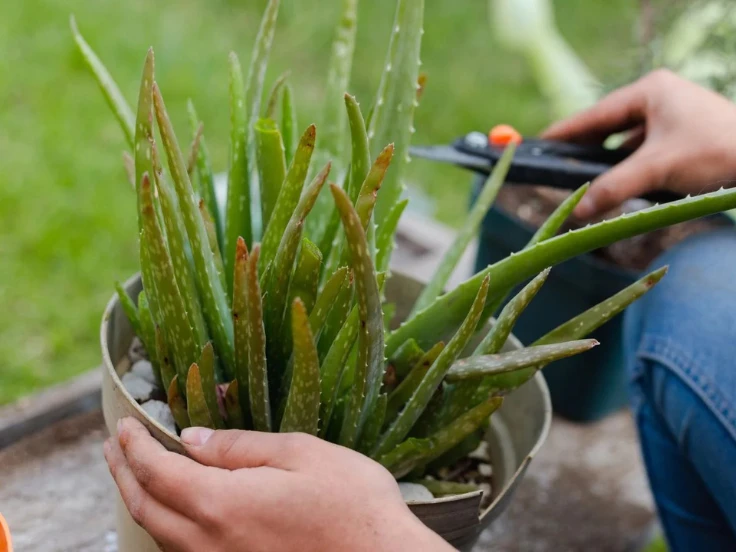
Assessing Your Aloe Vera Plant Before Pruning
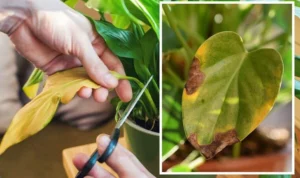
Before cutting, examine your plant carefully. Look for yellowing or browning leaves, shriveled or mushy leaves, and overcrowded growth. Next, mark or note the areas that need pruning. In fact, identifying problem areas ensures precise pruning and healthy results.
Essential Tools for Aloe Vera Trimming
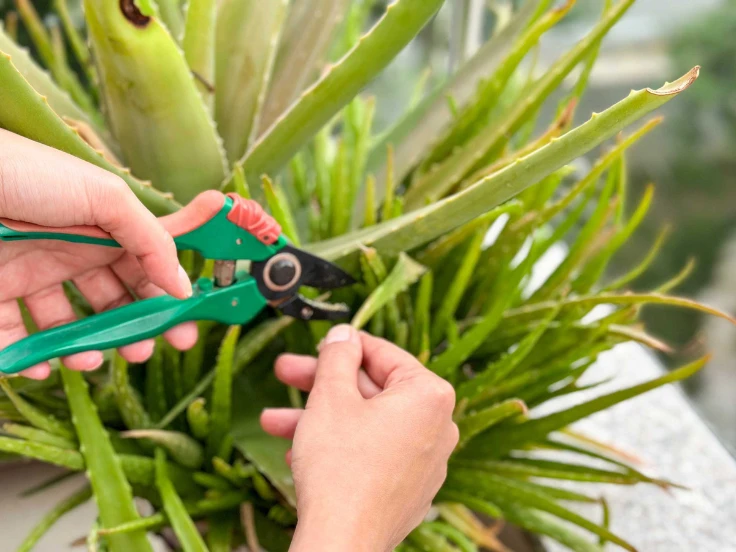
Use the right tools for aloe leaf pruning. First, a sharp pair of scissors or a single-blade knife is essential. Moreover, rubbing alcohol should be used to disinfect tools. Also, gloves can protect your hands from leaf sap. Consequently, clean and sharp tools minimize damage and prevent disease.
Removing Dead or Damaged Leaves
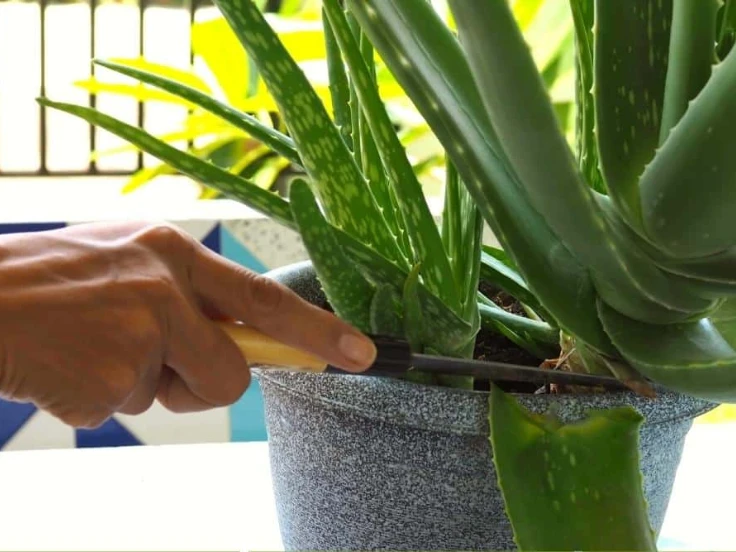
Start by trimming leaves that are dead, brown, or damaged at the base. Additionally, cutting away these leaves improves the plant’s appearance. Furthermore, it redirects energy to healthier leaves. Cut carefully close to the soil without harming surrounding leaves.
Trimming Older Leaves for Aloe Plant Maintenance
Older leaves at the base naturally die off. Therefore, trimming them maintains plant shape and encourages healthy new growth. Similarly, it improves airflow around the plant. Avoid removing healthy central leaves because they are crucial for the plant’s development.
Pruning Flower Stalks for Better Growth
Aloe vera may produce flower stalks, which can become dry after blooming. Once these flowers fade, cut the stalks at the base to help the plant redirect energy toward leaf growth. Moreover, pruning stalks prevents unsightly dried flowers from affecting the plant’s aesthetics.
Separating Aloe Vera Offsets (Pups)
Offsets, or pups, are small plants at the base of the mother plant. First, gently remove the pup, ensuring its roots are intact. Next, allow the cut area to callous for a day or two to prevent rot. Finally, plant it in well-draining soil suitable for succulents. As a result, this reduces overcrowding and provides new plants for propagation.
Avoid Cutting Central Leaves
Central leaves are nutrient-rich and critical for aloe growth. Therefore, only prune them if severely damaged. Otherwise, cutting healthy central leaves can stunt growth or reduce gel production. Meanwhile, focus on trimming older, damaged, or dead leaves.
Post-Pruning Care for Aloe Vera Plant
Proper care after pruning ensures your plant recovers and thrives. Firstly, wait a few days before watering after pruning to prevent rot. Additionally, place your plant in bright, indirect sunlight to encourage healthy growth. Furthermore, ensure the soil is well-draining and consider using a cactus or succulent mix. Finally, apply light fertilizer during the growing season to support recovery.
Common Mistakes When Pruning Aloe Vera Plant
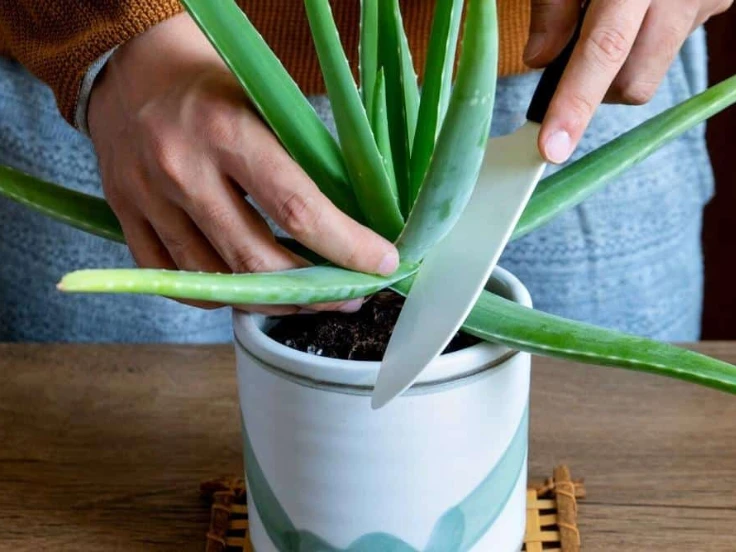
Avoid these pitfalls to ensure successful pruning. For instance, over-pruning can stress your plant. Also, using dirty or unsterilized tools can introduce disease. Moreover, cutting central healthy leaves unnecessarily may stunt growth. Finally, watering immediately after pruning can lead to root rot.
Benefits of Regular Aloe Vera Trimming
Pruning aloe vera offers several long-term benefits. Firstly, it boosts vitality and encourages new leaves. Additionally, it prevents disease spread and improves plant aesthetics. Moreover, it provides propagation opportunities through pups. Consequently, regular pruning ensures your aloe vera stays healthy, productive, and visually appealing.
FAQs on How to Prune Aloe Vera Plant
Q1: How often should I prune aloe vera plants?
Most aloe vera plants need pruning once every 6–12 months. Also, prune whenever you notice dead or damaged leaves to maintain plant health.
Q2: Can I propagate aloe vera from leaves?
Yes, but leaf propagation is less reliable than separating pups. First, cut a healthy leaf and let it callous for a few days. Next, plant it in well-draining soil. As a result, the leaf may develop roots and grow into a new plant.
Q3: Why are my aloe vera leaves turning brown at the tips?
Brown tips often indicate overwatering, underwatering, or extreme temperatures. Therefore, adjust watering and placement to prevent further damage.
Q4: Is it safe to prune aloe vera during winter?
Pruning is best during spring or summer when the plant is actively growing. Meanwhile, winter pruning can stress the plant and slow recovery.
Q5: Can pruning increase aloe gel production?
Yes, removing dead or damaged leaves allows the plant to focus energy on healthy leaves, which contain more nutrient-rich gel. Consequently, careful pruning can improve gel quality and yield.
Conclusion: Mastering How to Prune Aloe Vera Plant
Knowing how to prune an aloe vera plant keeps it healthy and productive. Regular pruning removes damaged leaves, controls size, and encourages propagation. For more on caring for desert plants, see our desert plants growing tips.
Prune carefully, maintain consistent care, and enjoy a lush, vibrant aloe vera plant while extending its longevity and gel production. In fact, proper pruning transforms your aloe into a thriving, ornamental, and useful plant. For more detailed guidance, you can refer to the University of Minnesota Extension Aloe Vera Care or the Royal Horticultural Society Aloe Vera Plant Care for expert tips and step-by-step instructions.